
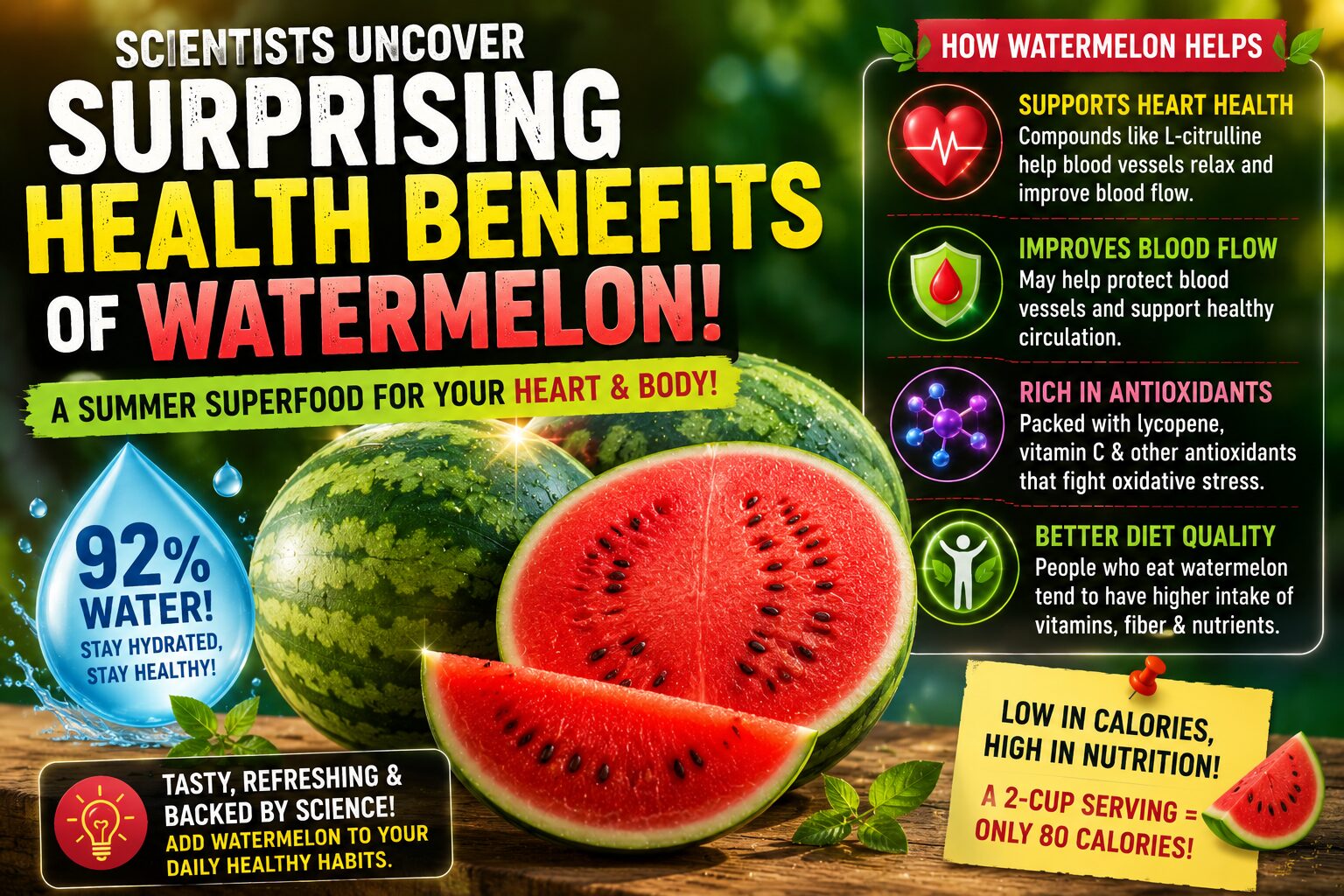
Scientists found that watermelon may help support heart health, improve diet quality, and provide important nutrients, antioxidants, and hydration.
🍉Kids Curiosity
What if one of summer’s tastiest fruits was secretly helping your heart too? ❤️
Scientists say watermelon may be much healthier than many people realize. New studies suggest the juicy fruit could help improve diet quality, support healthy blood vessels, and provide important nutrients that your body needs.
And yes… it still tastes delicious.
⭐ Key Highlights
- 🍉 Watermelon may support heart health
- ❤️ Special compounds may help blood vessels relax
- 💧 Watermelon is about 92% water
- 🧪 The fruit contains antioxidants and vitamins
- 🌞 People who eat watermelon often had healthier diets overall
❤️ Watermelon May Help Your Heart
Scientists studied people who regularly eat watermelon and discovered something surprising:
They often had:
- healthier diets
- more vitamins
- more fiber
- more antioxidants
- less added sugar
- less saturated fat
Researchers believe watermelon’s nutrients may help support better cardiovascular health.
🧪 The Special Compounds Inside Watermelon
Watermelon naturally contains compounds called:
L-citrullineand
L-arginineThese compounds help the body produce nitric oxide.
Nitric oxide helps blood vessels:
- relax
- widen
- improve blood flow
That is important for healthy circulation and heart function. ❤️
🍅 Watermelon Is Packed With Lycopene
Watermelon is also rich in:
lycopeneLycopene is a powerful antioxidant also found in tomatoes.
Scientists think antioxidants help protect the body from:
- oxidative stress
- cell damage
- some heart-related problems
Red watermelon varieties contain especially high amounts of lycopene.
💧 A Super Hydrating Fruit
Watermelon is made of about:
92% waterThat makes it a refreshing fruit during:
- hot weather
- sports
- outdoor play
- summer activities
A 2-cup serving also contains:
- vitamin C
- vitamin B6
- potassium
- magnesium
🧠 Science Terms Explained
❤️ Cardiovascular Health
The health of the heart and blood vessels.
🧪 Antioxidants
Special substances that help protect cells from damage.
💧 Hydration
Giving your body enough water to function properly.
🩸 Nitric Oxide
A molecule that helps blood vessels relax and improve blood flow.
🍹 Easy Analogy
Imagine your blood vessels are highways.
Nitric oxide helps open extra lanes so traffic (blood) can move more smoothly through the body.
Scientists think compounds in watermelon may help support this process!
🤯 Cool Science Fact
🧠 DID YOU KNOW?
Watermelon is technically both a fruit and a vegetable because it belongs to the cucumber family!
🌍 Why This Matters
Many people do not eat enough fruit every day.
Scientists say watermelon could be an easy and tasty way to:
- improve nutrition
- stay hydrated
- increase vitamin intake
- support heart health
Researchers are still studying the long-term effects, but the results look promising.
🎯 Big Takeaway
Scientists discovered that watermelon may provide more than just a refreshing summer snack.
The juicy fruit contains nutrients, antioxidants, and natural compounds that could help support heart health, circulation, hydration, and overall nutrition.
❓ Mini FAQ
Q1. Why is watermelon healthy?
It contains vitamins, antioxidants, water, and special compounds linked to heart health.
Q2. What is L-citrulline?
A natural compound in watermelon involved in nitric oxide production.
Q3. What does nitric oxide do?
It helps blood vessels relax and improve circulation.
Q4. How much water is in watermelon?
About 92%.
Q5. Does watermelon contain antioxidants?
Yes, including lycopene and vitamin C.

The Kids Science Magazine Editorial Team brings together nearly a decade of hands-on experience in electronics engineering, IoT systems, and embedded technology — combined with a deep passion for making complex science genuinely exciting for young minds. Our writers have worked across core electronics testing and real-world technology development, giving every science mystery article a foundation in actual engineering thinking rather than surface-level storytelling. We believe every child deserves access to mind-blowing science — explained clearly, honestly, and in a way that makes them lean forward and ask “but wait, WHY?” Every mystery published on this site is thoroughly researched, fact-checked against credible scientific sources, and written to spark curiosity in kids aged 8–14 across the USA, UK, Canada, Australia & Others across the Globe. New mystery every Friday — because science never runs out of surprises.