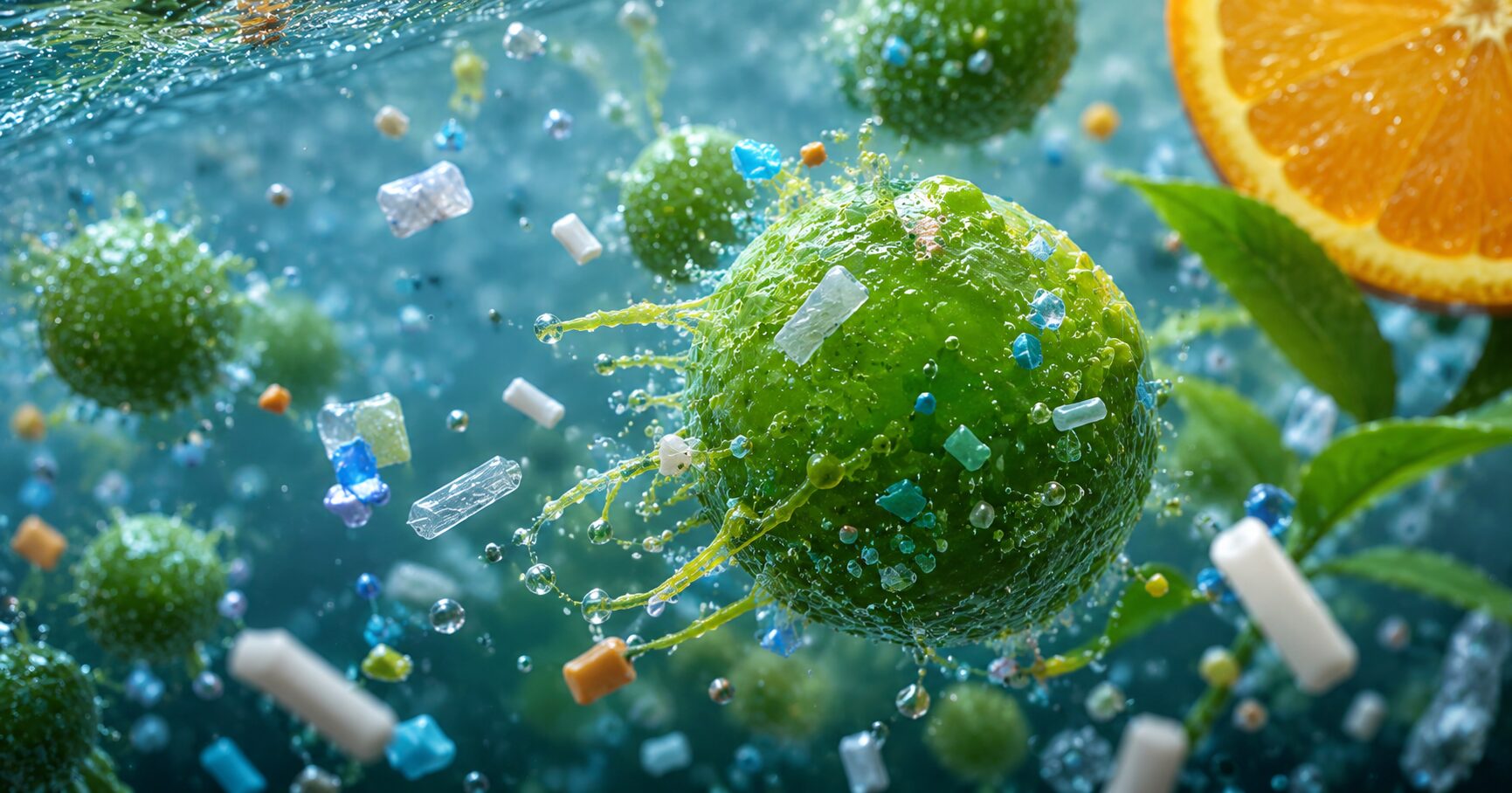
Scientists created special orange-scented algae that can grab harmful microplastics from water like a magnet, helping clean pollution from drinking water and wastewater.
🌍Kids Curiosity
What if slimy green algae could help save Earth’s water from tiny plastic pollution?
Scientists have created a special kind of algae that smells a little like oranges — and it may be able to trap dangerous microplastics floating in water! 🧪🍊
The discovery could become a powerful new way to clean polluted water and protect rivers, lakes, and even drinking water.

⭐ Key Highlights
- 🧫 Scientists engineered special algae
- 🍊 The algae produce orange-scented limonene
- 🧲 Microplastics stick to the algae like magnets
- 💧 The algae may help clean drinking water
- ♻️ Researchers also want to recycle the captured plastic
🖼️

5
🧫 How Does the Algae Work?
Researchers at the University of Missouri-Columbia created algae that produce a natural oil called limonene — the same chemical that gives oranges their citrus smell.
Limonene changes the algae’s surface, making it repel water.
Microplastics also repel water, so when the algae and plastics meet, they naturally stick together and form clumps that sink to the bottom. Scientists can then collect and remove the clumps more easily.
🧪 Why Are Microplastics Dangerous?
Microplastics are tiny bits of plastic so small that many are invisible to the human eye.
They have been found in:
- rivers
- oceans
- drinking water
- fish
- rain
- and even human bodies
Most wastewater treatment plants can remove large plastic pieces, but these tiny particles are much harder to catch.
That’s why scientists are searching for new solutions.
🍊 Why This Discovery Is Special
This algae doesn’t just remove plastic.
It may also:
- clean wastewater
- absorb extra nutrients
- reduce pollution
- help recycle plastics into safer materials
Researchers hope the system could someday be added to real wastewater treatment plants.
🤖 Meet “Shrek” the Giant Algae Tank
The research team already uses a giant algae bioreactor nicknamed:
“Shrek”The large tank helps process pollution from industrial gases.
In the future, scientists hope even bigger versions could help cities clean polluted water on a massive scale.
🧠 Science Terms Explained
🧫 Algae
Simple plant-like organisms that grow in water.
🧲 Microplastics
Tiny plastic particles smaller than 5 millimeters.
🍊 Limonene
A natural oil that gives oranges and lemons their smell.
♻️ Bioplastic
A more eco-friendly type of plastic made from biological materials.
🍹 Easy Analogy
Imagine sprinkling tiny bits of glitter into water.
Now imagine adding a sticky sponge that grabs the glitter and pulls it into clumps.
That’s similar to how this algae traps microplastics!
🤯 Cool Science Fact
🧠 DID YOU KNOW?
Scientists have discovered microplastics at the bottom of the ocean and even high in the clouds above Earth!
🌎 Why This Matters
Microplastic pollution is becoming one of Earth’s biggest environmental problems.
If this algae technology works on a larger scale, it could help:
- make drinking water cleaner
- reduce pollution in rivers and lakes
- protect wildlife
- recycle harmful plastic waste
It’s a small organism trying to solve a huge problem.
🎯 Big Takeaway
Scientists created orange-scented algae that may act like tiny plastic-catching magnets in water.
The discovery could one day help cities remove dangerous microplastics from drinking water while also reducing pollution and recycling waste.
❓ Mini FAQ
Q1. What are microplastics?
Tiny pieces of plastic pollution smaller than 5 millimeters.
Q2. Why is the algae special?
It produces limonene, which helps it grab microplastics.
Q3. What does limonene smell like?
It smells similar to oranges and citrus fruits.
Q4. Can this clean drinking water?
Scientists hope it may help future water treatment systems.
Q5. Is the research finished?
No, researchers say the technology is still in early stages.
How Do Air Conditioners Keep Us Cool? The Amazing Science of Heat Transfer for Kids

The Kids Science Magazine Editorial Team brings together nearly a decade of hands-on experience in electronics engineering, IoT systems, and embedded technology — combined with a deep passion for making complex science genuinely exciting for young minds. Our writers have worked across core electronics testing and real-world technology development, giving every science mystery article a foundation in actual engineering thinking rather than surface-level storytelling. We believe every child deserves access to mind-blowing science — explained clearly, honestly, and in a way that makes them lean forward and ask “but wait, WHY?” Every mystery published on this site is thoroughly researched, fact-checked against credible scientific sources, and written to spark curiosity in kids aged 8–14 across the USA, UK, Canada, Australia & Others across the Globe. New mystery every Friday — because science never runs out of surprises.