
Even Earth’s Most Isolated Continent Isn’t Plastic-Free
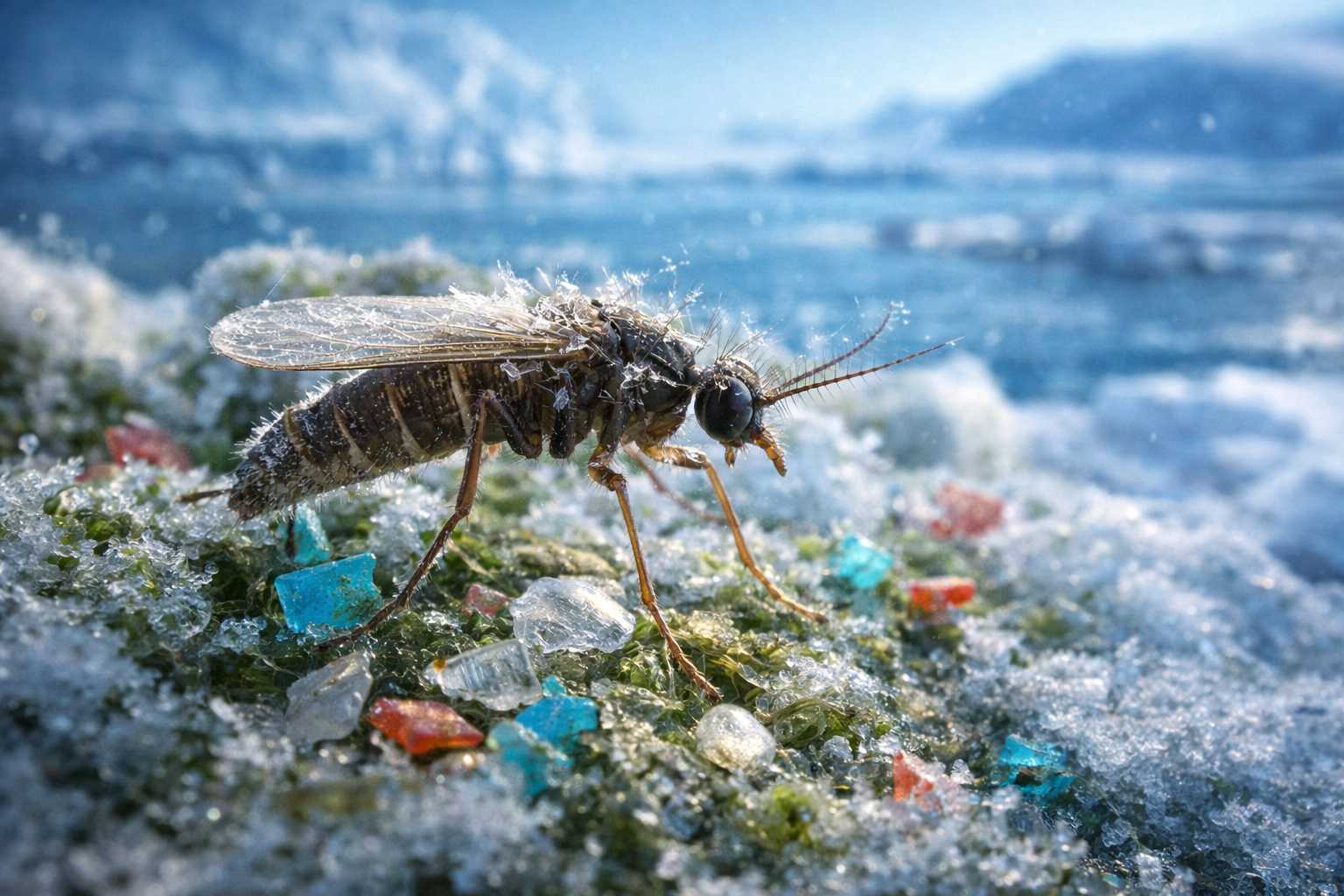
Microplastics have been found inside Belgica antarctica, Antarctica’s only native insect, showing how far plastic pollution has spread across the planet.
🔍 Key Highlights
- Scientists found microplastics inside Antarctica’s only native insect
- The insect is called Belgica antarctica
- Lab tests show the larvae survive plastic exposure — but with reduced fat reserves
- This is the first confirmed case of plastic inside wild Antarctic insects
- Even the most remote ecosystems are not untouched by pollution
A Tiny Insect at the End of the Earth 🌍
Imagine living in a place where:
- Temperatures drop far below freezing ❄️
- There are no trees 🌲
- The sun disappears for months ☀️
- Winds are fierce and the land is mostly ice
Now imagine being the only insect native to that entire continent.
Meet Belgica antarctica — a tiny, rice-sized, non-biting midge that survives in one of the harshest places on Earth.
For years, scientists believed Antarctica was one of the last untouched places on the planet.
But now, researchers have discovered something alarming.
Even this extreme survivor is swallowing microplastics.
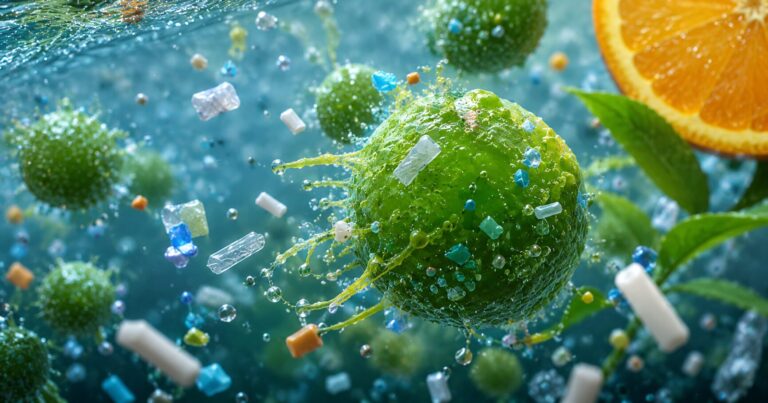
What Are Microplastics? 🧴
Microplastics are:
- Tiny plastic pieces smaller than 5 millimeters
- Often invisible to the naked eye
- Created when larger plastic breaks down
They travel through:
- Ocean currents 🌊
- Wind 💨
- Snowfall ❄️
- Human activity 🚢
Scientists have already found them in oceans, mountains, rainwater — and even inside human bodies.
Now, they’ve reached Antarctica’s only native insect.
The Toughest Bug on Earth 🐛
Belgica antarctica is known as a poly-extremophile.
That means it can survive:
- Extreme cold
- Drying out
- High salt
- Intense UV radiation
- Big temperature swings
Its larvae live in damp moss and algae along the Antarctic Peninsula. In some places, there can be 40,000 larvae in one square meter!
They play a key role in:
- Recycling nutrients
- Supporting the fragile soil ecosystem
But could they handle plastic pollution too?
Lab Tests: Surviving — But at a Cost ⚖️
Scientists from the University of Kentucky tested what happens when larvae are exposed to microplastics.
At first, the results seemed reassuring:
- Survival rates didn’t drop
- Metabolism stayed normal
But when researchers looked closer, they found something hidden.
Larvae exposed to higher plastic levels had lower fat reserves.
Fat is extremely important in Antarctica:
- It stores energy
- It helps insects survive long freezing periods
- It supports long development cycles (these insects grow over two years)
Even small changes in energy storage could affect survival long-term.
Wild Insects Already Contaminated 🧪
The team also collected larvae from 20 Antarctic sites during a research cruise.
Using advanced imaging tools that detect particles smaller than a grain of sand, they found microplastic fragments inside wild midges.
Only two fragments were detected in 40 insects.
That may sound small — but scientists say it’s a warning sign.
Plastic has officially entered Antarctica’s soil ecosystem.
How Did Plastic Get There? 🌊💨
Even though Antarctica is remote, plastics can arrive through:
- Ocean currents
- Wind transport
- Snowfall
- Research stations and ships
Plastic pollution doesn’t stay where it’s made. It travels.
Why This Matters 🌍
The discovery shows that no place on Earth is truly untouched.
Even a tiny insect living at the bottom of the world is exposed to human-made pollution.
For now:
- Plastic levels are lower than in most regions
- The ecosystem isn’t overwhelmed
But scientists worry about:
- Long-term exposure
- Climate change making conditions warmer and drier
- Added stress on already fragile systems
🌟 Big Takeaway
Antarctica feels far away — frozen, wild, and pure.
But microplastics have reached even its smallest native creature.
This tiny midge reminds us of something powerful:
🌎 Our actions travel farther than we think.
🧠 Quick Quiz: Polar Pollution Check!
1. What is Belgica antarctica?
A) A penguin
B) A moss plant
C) Antarctica’s only native insect
D) A fish
2. What are microplastics?
A) Natural ice crystals
B) Tiny pieces of plastic
C) Bacteria
D) Snow particles
3. What change was found in plastic-exposed larvae?
A) They grew bigger
B) They lost fat reserves
C) They changed color
D) They stopped moving
4. How can plastics reach Antarctica?
A) Ocean currents
B) Wind
C) Human activity
D) All of the above
5. Why is fat important for the larvae?
A) It makes them heavier
B) It stores energy
C) It changes their color
D) It helps them fly
✅ Answers:
1-C, 2-B, 3-B, 4-D, 5-B
🤔 Think About This…
If plastic can reach the coldest, most remote continent on Earth, what responsibility do we have to reduce pollution at home?
Explore More
🌳⚠️Scientists Warn: Forests Are Losing Their Strength and Diversity
🦟Forest Loss Is Making Mosquitoes Bite Humans More — And That’s Dangerous
🌬️🔬 Scientists Finally Solve a 100-Year-Old Mystery in the Air We Breathe

The Kids Science Magazine Editorial Team brings together nearly a decade of hands-on experience in electronics engineering, IoT systems, and embedded technology — combined with a deep passion for making complex science genuinely exciting for young minds. Our writers have worked across core electronics testing and real-world technology development, giving every science mystery article a foundation in actual engineering thinking rather than surface-level storytelling. We believe every child deserves access to mind-blowing science — explained clearly, honestly, and in a way that makes them lean forward and ask “but wait, WHY?” Every mystery published on this site is thoroughly researched, fact-checked against credible scientific sources, and written to spark curiosity in kids aged 8–14 across the USA, UK, Canada, Australia & Others across the Globe. New mystery every Friday — because science never runs out of surprises.




One Comment
Comments are closed.