🥕 Introduction: Why Can’t Food Stay Fresh Forever?
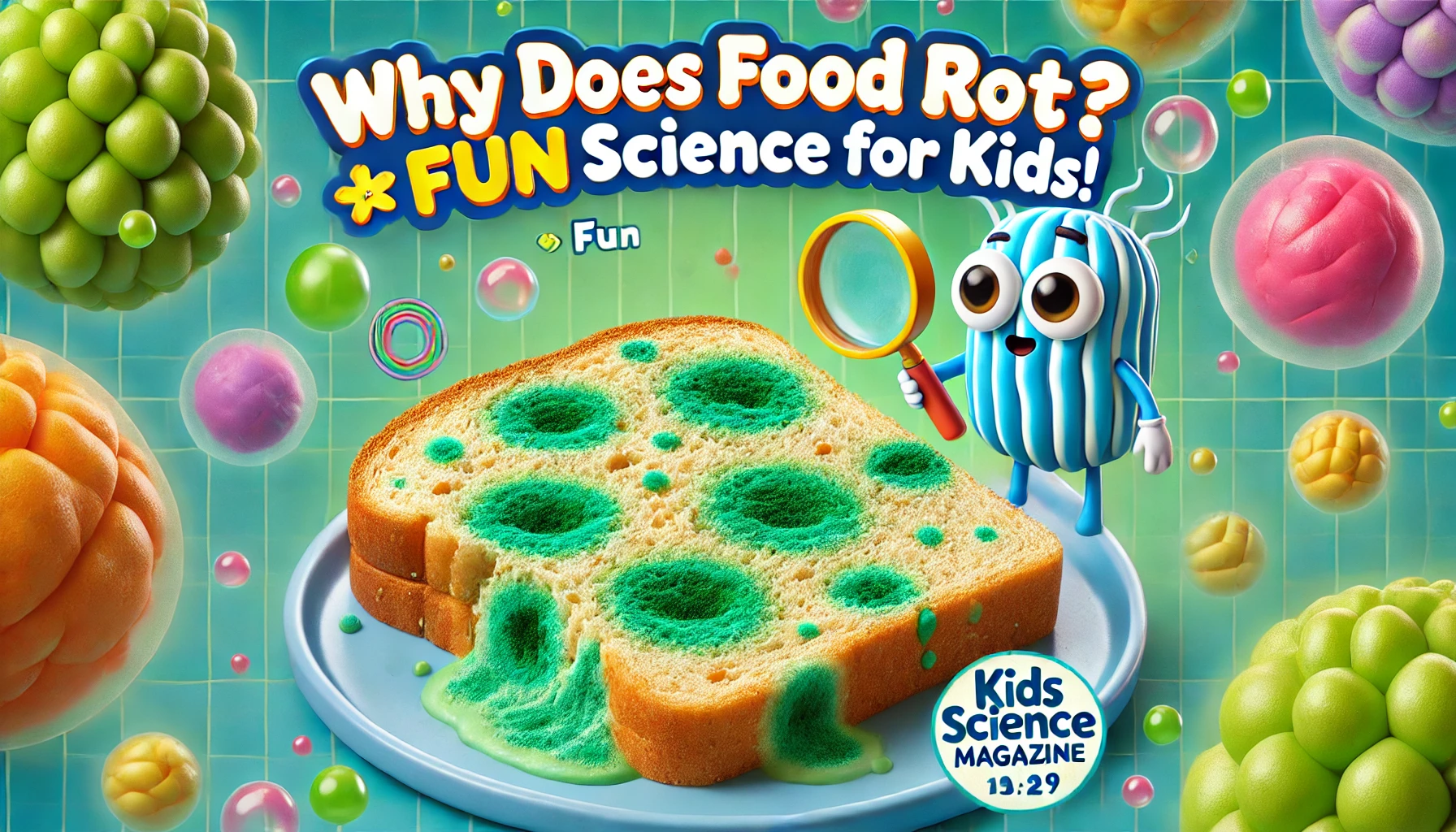
Have you ever left a slice of apple 🍏 or a piece of bread 🥖 out for too long, only to see it turn brown, mushy, or even get fuzzy with mold? Yuck! But don’t worry – it’s all part of a process called decomposition (say: dee-kom-poh-ZI-shun). Let’s dive into this fascinating world of bacteria 🦠 and mold to learn why food starts to rot.
🤔 What Does “Rotting” Mean?

Rotting is what happens when food breaks down or “spoils.” It changes color, texture, and smell. While rotting food doesn’t look or smell nice, it’s actually a natural process that helps return food and other organic things (like plants) back to the Earth 🌎.
🦠 Meet the Tiny Helpers: Bacteria and Mold!
Rotting is a team effort by tiny living things called bacteria and mold:
- Bacteria: These are super small organisms (called microbes) that live all around us – even on our food! Some bacteria are helpful, but others make food go bad.
- Mold: Mold is a type of fungus that grows in fuzzy green, white, or blue patches. You’ve probably seen mold on old bread or cheese 🧀. It loves moist, warm places.
These tiny helpers are “decomposers” because they break down food into simpler parts.
🌡️ What Makes Food Rot Faster?
Several things can speed up rotting, like:
- Warm Temperatures 🌞: Bacteria and mold grow faster in warm places.
- Moisture 💧: Water helps mold and bacteria grow, which is why wet foods rot faster than dry foods.
- Oxygen 🫧: Many decomposers need air to grow, so if food is left out in open air, it rots faster.
That’s why foods like milk and meat need to stay cold – it keeps bacteria from growing quickly.
🍞 Signs of Rotting Food
Here are some common signs that food is going bad:
- Smell 👃: Spoiled food often has a strong, stinky smell!
- Texture 👋: It may feel slimy or mushy.
- Color Changes 🌈: Fresh fruits and vegetables might turn brown or darken.
- Mold Spots 🍞: White, green, or blue patches mean mold is growing!
🔍 Why Is Rotting Important?
Believe it or not, rotting has a good side! It helps keep our planet clean. When food rots, it becomes part of the soil, which helps plants grow 🌱. Decomposition also helps clean up dead leaves, trees, and even animals in nature!
🧪 Fun Experiment: Watch Food Rot!
With an adult’s help, you can try this fun science experiment:
- Choose Foods 🍌: Pick a few different foods, like a piece of bread, cheese, and an apple slice.
- Observe 👀: Put them on a plate and leave them in a safe, warm spot.
- Check Daily 📅: Look at them each day and take notes! Do they change color? Do you see mold?
Remember, don’t touch rotting food. Just observe from a distance!
🥇 Quick “Did You Know?” Fun Facts About Rotting Food!
- Honey Never Spoils! 🍯
Did you know that honey can stay fresh for thousands of years? Archaeologists have found pots of honey in ancient tombs that are still edible! - Frozen Foods Last Longer ❄️: Freezing food stops bacteria and mold from growing.
- Bananas Are Ripening Machines! 🍌
Bananas give off a gas called ethylene that speeds up the ripening process of other fruits. That’s why if you put a banana next to an apple, the apple will ripen faster! - The Fuzz on Mold Is Alive! 🕸️
Mold isn’t just one single thing – it’s actually made of lots of tiny spores that grow together. Each fuzzy patch you see is a collection of mold “plants” working together. - Food Waste Hurts the Earth 🌍: When food rots in landfills, it releases a gas that can harm our planet, so it’s best to only buy or take what you need
- Why Some Cheese Is Moldy on Purpose 🧀
Some cheeses, like blue cheese and Brie, are made with good mold! The mold adds flavor, but it’s carefully grown and safe to eat. - Your Nose Knows! 👃
The “bad” smell of rotting food is actually a warning signal from nature. Our noses are designed to notice this smell so we don’t eat food that could make us sick! - Why Freezing Food Stops Rotting ❄️
Freezing makes bacteria and mold go “to sleep” so they can’t grow. That’s why frozen foods last much longer than foods left at room temperature. - Compost Is Recycled Food Waste 🌱
Old food scraps like banana peels, apple cores, and veggies can be turned into compost, which is a superfood for plants and helps gardens grow! - Mold Is Actually a Type of Fungus 🍄
Just like mushrooms, mold is a type of fungus. It grows best in warm, moist places, which is why it loves the leftovers in your fridge if they’ve been there too long! - Not All Bacteria Are Bad! 🦠
Some bacteria are very helpful. For example, bacteria help turn milk into yogurt and make pickles taste tangy. - Rotting Food Gives Off Gas! 💨
When food rots, it releases gases, including a gas called methane. If we waste food, it goes to landfills and releases methane, which isn’t good for the environment. - Food Spoils Faster in the Summer ☀️
Warm weather makes bacteria and mold grow much faster, so food tends to spoil quicker in the summer than in the winter. - Lemons and Vinegar Keep Food Fresh 🍋
Adding lemon juice or vinegar can slow down bacteria, which is why we use them to pickle foods or add them to salads to keep veggies fresh. - Some Animals Love Rotting Food 🦉🐞
Certain animals, like owls and beetles, are part of nature’s cleanup team. They help break down old food in the wild, which keeps forests clean.
🌟 Poll: What’s the Yuckiest Rotten Food?
Poll Question: Which food do you think smells the worst when it rots?
- 🥛 Milk
- 🐟 Fish
- 🍌 Banana
- 🧀 Cheese
Quiz: How Much Do You Know About Food Rotting?
Question 1: What makes food rot faster?
- A) Cold temperatures ❄️
- B) Warm temperatures 🌞
- C) Wind 🌬️
- D) Darkness 🌑
Answer: B) Warm temperatures 🌞
Question 2: What is the name of the tiny creatures that make food go bad?
- A) Bubbles 🫧
- B) Bacteria 🦠
- C) Robots 🤖
- D) Stars ⭐
Answer: B) Bacteria 🦠
Question 3: Which of these foods can last for thousands of years without spoiling?
- A) Bread 🍞
- B) Milk 🥛
- C) Honey 🍯
- D) Apples 🍏
Answer: C) Honey 🍯
Question 4: Why do we put food in the fridge?
- A) To make it taste better
- B) To keep it cold so bacteria grow slower
- C) To make it look shiny
- D) To make it smell nice
Answer: B) To keep it cold so bacteria grow slower
Puzzle: Match the Rotting Process Words!
Match the terms related to food rotting with their descriptions.
- Bacteria
- A) Fuzzy green, white, or blue growth on old food 🍞
- Mold
- B) The breaking down of food and other natural items 🌱
- Decomposition
- C) Tiny organisms that cause food to rot 🦠
Answers:
- Bacteria -> C
- Mold -> A
- Decomposition -> B
Kids can see which rotting food smell is the least favorite among their friends!
Fill in the Blanks: The Rotting Food Story
Complete the sentences by filling in the missing words. (Hints are provided!)
- Food rots because of tiny helpers like ____ and ____. (Hint: Think “B” and “M”)
- Answer: Bacteria and Mold
- ____ is a special process that helps break down food and return it to the Earth. (Hint: It starts with “D”)
- Answer: Decomposition
- Warm, ____ places are the best spots for mold and bacteria to grow. (Hint: It rhymes with “choice”)
- Answer: Moist
Conclusion: Rotting Is Nature’s Way of Recycling! ♻️
Even though rotting food may seem gross, it’s a helpful part of nature’s recycling process. By breaking down old food, bacteria and mold keep the Earth healthy and make room for new growth. So next time you see a fuzzy strawberry 🍓 or a brown banana, remember – it’s all part of nature’s plan!
Explore More
- How Do Airplanes Stay in the Sky? | Lift & Flight Science for Kids ✈️
- 🌊🪸 A Secret Ocean World Reveals Hundreds of Never-Before-Seen Species
- 🏺 The Mystery of King Tut’s Secret Jars : Did Ancient Egyptians Hide Powerful Drugs with Their Pharaohs?
The Kids Science Magazine Editorial Team brings together nearly a decade of hands-on experience in electronics engineering, IoT systems, and embedded technology — combined with a deep passion for making complex science genuinely exciting for young minds. Our writers have worked across core electronics testing and real-world technology development, giving every science mystery article a foundation in actual engineering thinking rather than surface-level storytelling. We believe every child deserves access to mind-blowing science — explained clearly, honestly, and in a way that makes them lean forward and ask “but wait, WHY?” Every mystery published on this site is thoroughly researched, fact-checked against credible scientific sources, and written to spark curiosity in kids aged 8–14 across the USA, UK, Canada, Australia & Others across the Globe. New mystery every Friday — because science never runs out of surprises.