
Meet Gregor Mendel, the scientist-monk who unlocked the mysteries of how traits are passed from parents to children through his pea plant experiments. A fun, easy-to-understand kids’ science story filled with facts, discoveries, and quizzes!
Have you ever looked at your mom’s eyes or dad’s smile and thought, “Hey, I look just like them!”? Well, the reason we look like our parents was first explained by a curious monk named Gregor Mendel — the man who discovered how traits are passed from one generation to another. 🌻✨
🌼 A Curious Boy in a Small Village
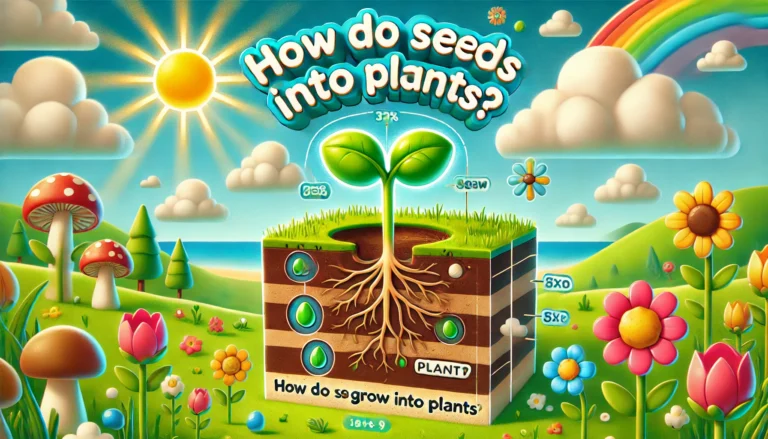
Gregor Mendel was born in 1822 in a tiny village in Austria. He was a quiet boy who loved nature — especially plants and insects. 🌳🐞 He often helped his family on their farm, where he wondered why some plants grew tall while others stayed short, and why some peas were green while others were yellow.
Even as a kid, Mendel loved asking questions. Instead of being satisfied with “just because,” he wanted to know why things happened. That curiosity led him to a life of discovery! 🌟
🧑🌾 The Monk Who Loved Peas
When Mendel grew up, he became a monk and joined a monastery. But instead of only praying and studying religion, he spent much of his time in the monastery garden — surrounded by rows and rows of pea plants! 🌱😄
Why peas? Because they were small, easy to grow, and came in many varieties — some tall, some short, some with smooth seeds, others with wrinkled ones. Mendel decided to study how these traits were passed on when pea plants made new seeds.
🔬 The Great Pea Plant Experiments
For over eight years, Mendel grew more than 28,000 pea plants — yes, that’s a lot of peas! 🫛🫛
He carefully crossed different types of plants, tracked their colors, shapes, and sizes, and wrote everything down.
He noticed patterns — like when he crossed a yellow pea plant with a green one, the next generation had mostly yellow peas. But when those peas grew and produced seeds, green peas reappeared!
This was a huge discovery. He realized that traits don’t blend — they are passed on as separate units, what we now call genes! 🧬
🌟 Mendel’s Rules of Heredity
Mendel’s work led to the three laws of genetics that scientists still use today:
- Law of Segregation – Each trait comes from a pair of “factors” (now called genes), one from each parent.
- Law of Dominance – Some traits hide others (like yellow peas hiding green ones).
- Law of Independent Assortment – Traits are passed on separately from one another.
These rules are the foundation of modern genetics — the science that helps us understand heredity, DNA, and even how scientists cure diseases today! 🌍💡
😮 Do You Know?
- Mendel didn’t get famous during his lifetime. Scientists didn’t understand his work until 30 years after his death!
- He also studied honeybees and weather patterns. 🐝🌦️
- Mendel’s pea garden is still preserved in the Czech Republic and visited by scientists from all over the world!
- The word “genetics” came much later, but Mendel’s experiments made it possible!
🧠 Mini Quiz Time!
Let’s see how much you remember! 🧐
- What plant did Mendel study?
- What do we call the “traits” Mendel discovered?
- How many years did Mendel spend growing pea plants?
- Why do you think Mendel’s work was important for medicine and farming today?
(You can discuss these with your teacher or friends — or write your own “pea experiment” plan!) 🌱✏️
💭 Poll for Kids:
If you could experiment with anything like Mendel, what would you choose?
- 🥕 Carrots
- 🦋 Butterflies
- 🌻 Sunflowers
- 🐠 Fish
👉 Vote in our Kids Science Poll and see what others picked!
🌈 Mendel’s Legacy Lives On
Today, every time a doctor studies your DNA, a farmer grows better crops, or a scientist cures a genetic disease, they’re using the science that Gregor Mendel started.
So next time you eat peas for dinner, remember — those little green seeds changed the world of science forever! 🫛💫
✨ Moral for Young Scientists:
Curiosity, patience, and careful observation can lead to discoveries that change the world — even if it starts in a small garden! 🌍💚

The Kids Science Magazine Editorial Team brings together nearly a decade of hands-on experience in electronics engineering, IoT systems, and embedded technology — combined with a deep passion for making complex science genuinely exciting for young minds. Our writers have worked across core electronics testing and real-world technology development, giving every science mystery article a foundation in actual engineering thinking rather than surface-level storytelling. We believe every child deserves access to mind-blowing science — explained clearly, honestly, and in a way that makes them lean forward and ask “but wait, WHY?” Every mystery published on this site is thoroughly researched, fact-checked against credible scientific sources, and written to spark curiosity in kids aged 8–14 across the USA, UK, Canada, Australia & Others across the Globe. New mystery every Friday — because science never runs out of surprises.