
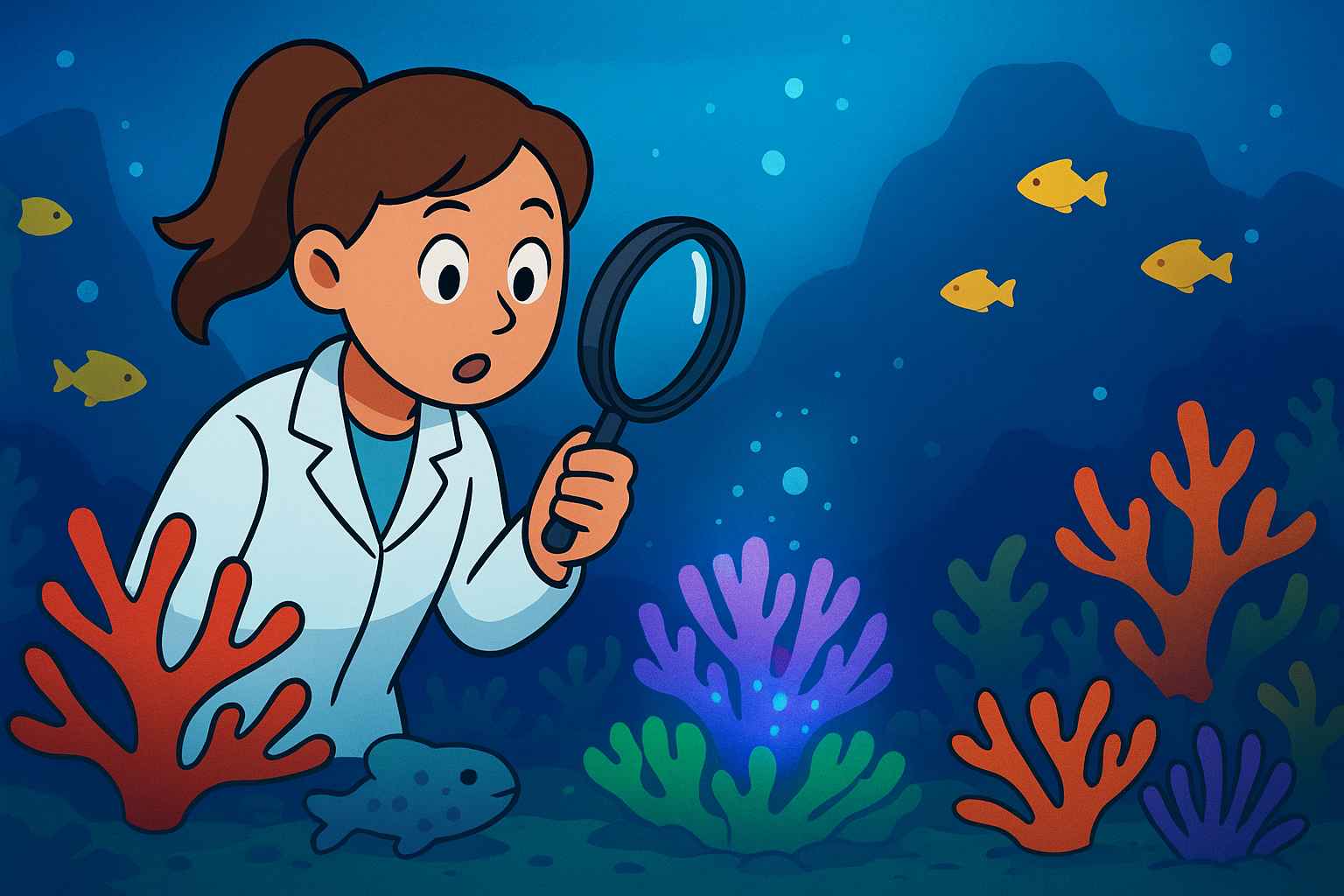
Deep under the frozen waters of Antarctica, a robot explorer named Lassie made a jaw-dropping discovery — a secret underwater city filled with thousands of perfectly shaped fish nests! 🐟❄️
Scientists from the University of Tokyo and their partners were originally exploring the icy Weddell Sea to study melting ice shelves — and maybe even spot the lost ship Endurance from Ernest Shackleton’s 1915 expedition. But instead, their robotic camera stumbled upon something incredible: a vast field of circular fish nests arranged in neat patterns, stretching as far as the eye could see.
Each nest looked like a tiny crater on the seafloor, carefully swept clean of the algae and plankton that covered everything else. When scientists looked closer, they realized each one was home to a hardworking parent fish — a yellowfin notie, a type of Antarctic rockcod — guarding its eggs from hungry predators!
“This was like discovering a whole underwater neighborhood,” said researchers. “Each fish had its own home, and together they formed a well-organized colony.”
The Icy Expedition
The discovery happened after the giant iceberg A68, almost the size of a small country, broke away from the Larsen C Ice Shelf in 2017. This allowed scientists to explore areas that had been trapped under ice for centuries.
Using the remotely operated vehicle (ROV) nicknamed Lassie, the team from the Weddell Sea Expedition 2019 sent cameras deep below 200 meters of ice. What they saw astonished them — over a thousand circular nests, all cleaned and maintained like underwater gardens.
Some nests stood alone, while others curved into lines or clustered together like apartment blocks. It wasn’t random — it was beautifully patterned, a sign of teamwork and survival.
A Lesson in Cooperation
The fish’s behavior showed what scientists call the “selfish herd” rule — animals stay safer in groups because those in the middle are protected by others on the outside. The larger, stronger fish usually guarded the edge nests, defending the colony from danger.
This clever arrangement helps the yellowfin noties and their babies survive in one of Earth’s toughest environments — where water temperatures can drop below freezing!
Why This Discovery Matters
Scientists say this hidden “fish city” proves the Weddell Sea is a Vulnerable Marine Ecosystem — full of life that needs protection. These breeding grounds may be vital for the Antarctic food web, feeding penguins, seals, and other sea creatures.
Researchers hope this discovery will help make the Weddell Sea a Marine Protected Area, ensuring that this icy underwater wonder stays safe for generations.
So next time you picture Antarctica, don’t just imagine penguins — think of thousands of brave fish parents guarding their tiny homes under a frozen sea! 🌊🐠💙
Kids Weekly Quiz on: Topic 16: Energy Resources (Renewable vs Non-renewable)
Question 1/20
Which energy source is considered renewable?
Question 2/20
What type of fuel is formed from ancient organic matter?
Question 3/20
Which renewable resource uses moving air to generate electricity?
Question 4/20
Coal is classified as?
Question 5/20
Which energy source produces electricity using flowing water?
Question 6/20
Solar panels convert sunlight into?
Question 7/20
Which non-renewable fuel is commonly used in vehicles?
Question 8/20
What is the main disadvantage of fossil fuels?
Question 9/20
Which renewable source uses heat from inside Earth?
Question 10/20
Natural gas is primarily composed of?
Question 11/20
Which energy resource is replenished naturally over short periods?
Question 12/20
Nuclear power plants generate energy through?
Question 13/20
Which renewable energy source depends on ocean tides?
Question 14/20
Why are renewable resources important?
Question 15/20
Which fuel has the highest carbon dioxide emissions when burned?
Question 16/20
Biomass energy comes mainly from?
Question 17/20
Which source is an example of non-renewable energy?
Question 18/20
What is a major benefit of solar energy?
Question 19/20
Which energy source relies on splitting atomic nuclei?
Question 20/20
Wind turbines primarily convert wind into?

The Kids Science Magazine Editorial Team brings together nearly a decade of hands-on experience in electronics engineering, IoT systems, and embedded technology — combined with a deep passion for making complex science genuinely exciting for young minds. Our writers have worked across core electronics testing and real-world technology development, giving every science mystery article a foundation in actual engineering thinking rather than surface-level storytelling. We believe every child deserves access to mind-blowing science — explained clearly, honestly, and in a way that makes them lean forward and ask “but wait, WHY?” Every mystery published on this site is thoroughly researched, fact-checked against credible scientific sources, and written to spark curiosity in kids aged 8–14 across the USA, UK, Canada, Australia & Others across the Globe. New mystery every Friday — because science never runs out of surprises.





2 Comments
Comments are closed.