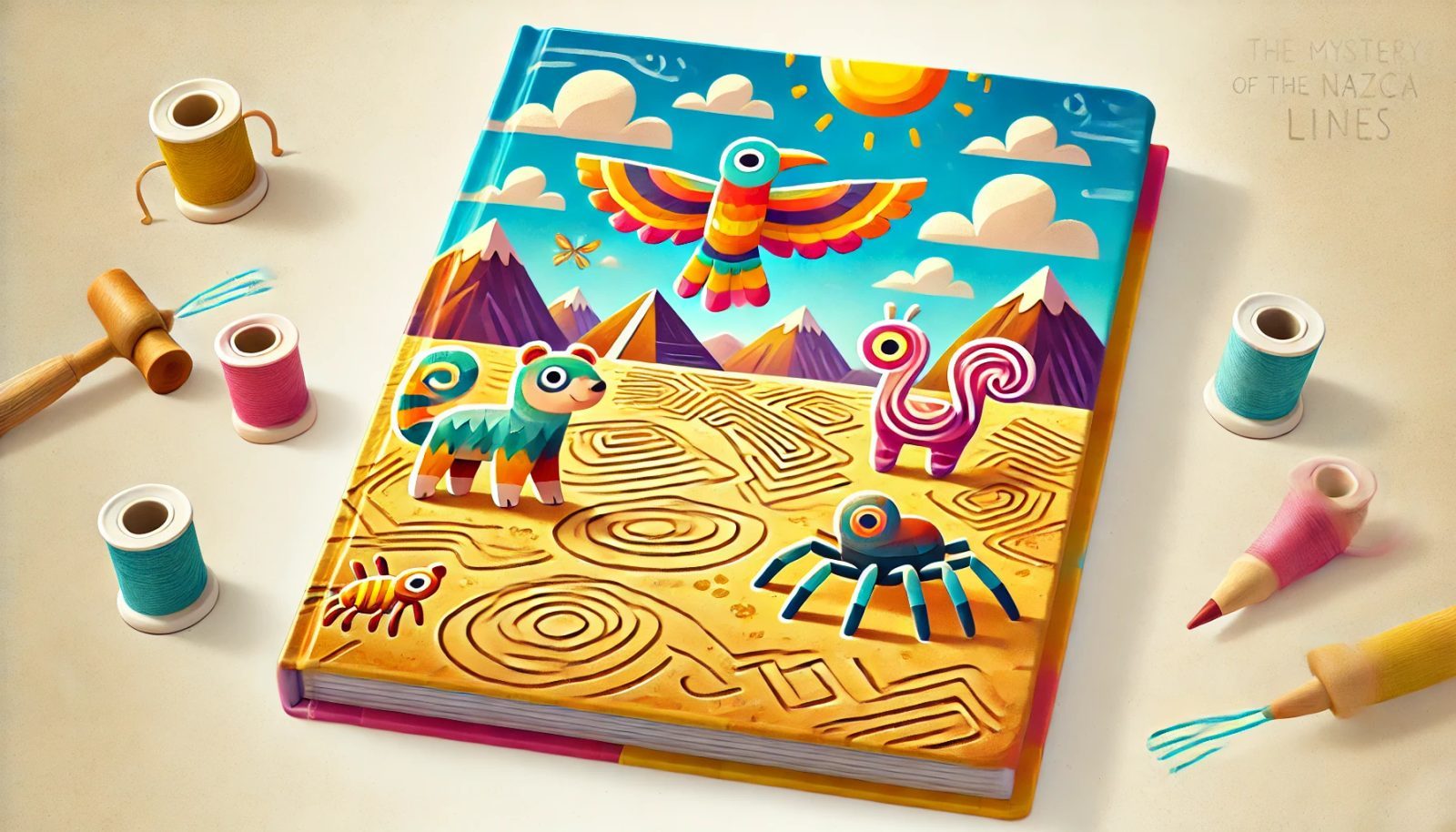
The Nazca Lines: Messages to the Sky?
Secrets of Ancient Desert Drawings: Unraveling how the Nazca culture etched massive geoglyphs into the arid plains of southern Peru.
Imagine walking across a desert and discovering enormous drawings carved into the ground—so big that they can only be fully appreciated from high above! These are the Nazca Lines, one of the greatest archaeological mysteries of the ancient world. Located across the arid pampas of southern Peru, these massive geoglyphs depict animals, plants, straight tracks, and geometric figures. But who made them, and why? This question has fascinated scientists, historians, and explorers for generations.
Background
The Nazca Lines are ancient geoglyphs (“ground drawings”) created over 2,000 years ago by the pre-Inca Nazca culture (flourishing roughly between 200 BCE and 600 CE). Stretching across an area of about 190 square miles (500 square kilometers) between the towns of Nazca and Palpa, researchers have cataloged over 800 straight lines, 300 geometric figures (trapezoids, spirals, triangles), and dozens of biomorph designs, including a hummingbird, monkey, condor, and spider.
Ancient surveyors constructed the designs through a simple yet ingenious technique: they removed the sun-baked, reddish-brown iron-oxide pebbles from the desert surface, exposing the lighter-colored, gypsum-rich subsoil underneath. Because the high desert plateau is one of the driest, windless places on Earth, these delicate lines have remained preserved for over two millennia without washing away.
Theories About the Nazca Lines
Archaeologists, anthropologists, and astronomers have proposed several leading hypotheses:
Did You Know? Fascinating Facts
Interactive Review
Encouragement to Explore
The Nazca Lines demonstrate the extraordinary surveying skill, geometric ingenuity, and artistic devotion of ancient engineers who mastered their desert home without modern instruments. Keep exploring ancient history and earth science—there are still hundreds of undiscovered geoglyphs waiting to be identified across the globe!
✨ Did You Know?
📖 Science Word
Geoglyph
/JEE-oh-glif/A large-scale design, drawing, or motif produced on the ground by arranging stones, removing surface gravel, or carving earth.
🔤 Word Scramble
Test Yourself!
Question 1 of 4
How did ancient Nazca workers create the contrasting white lines against the dark desert floor?
Quick Poll
Which theory about the primary purpose of the Nazca Lines do you find most convincing?
How fun was this article?