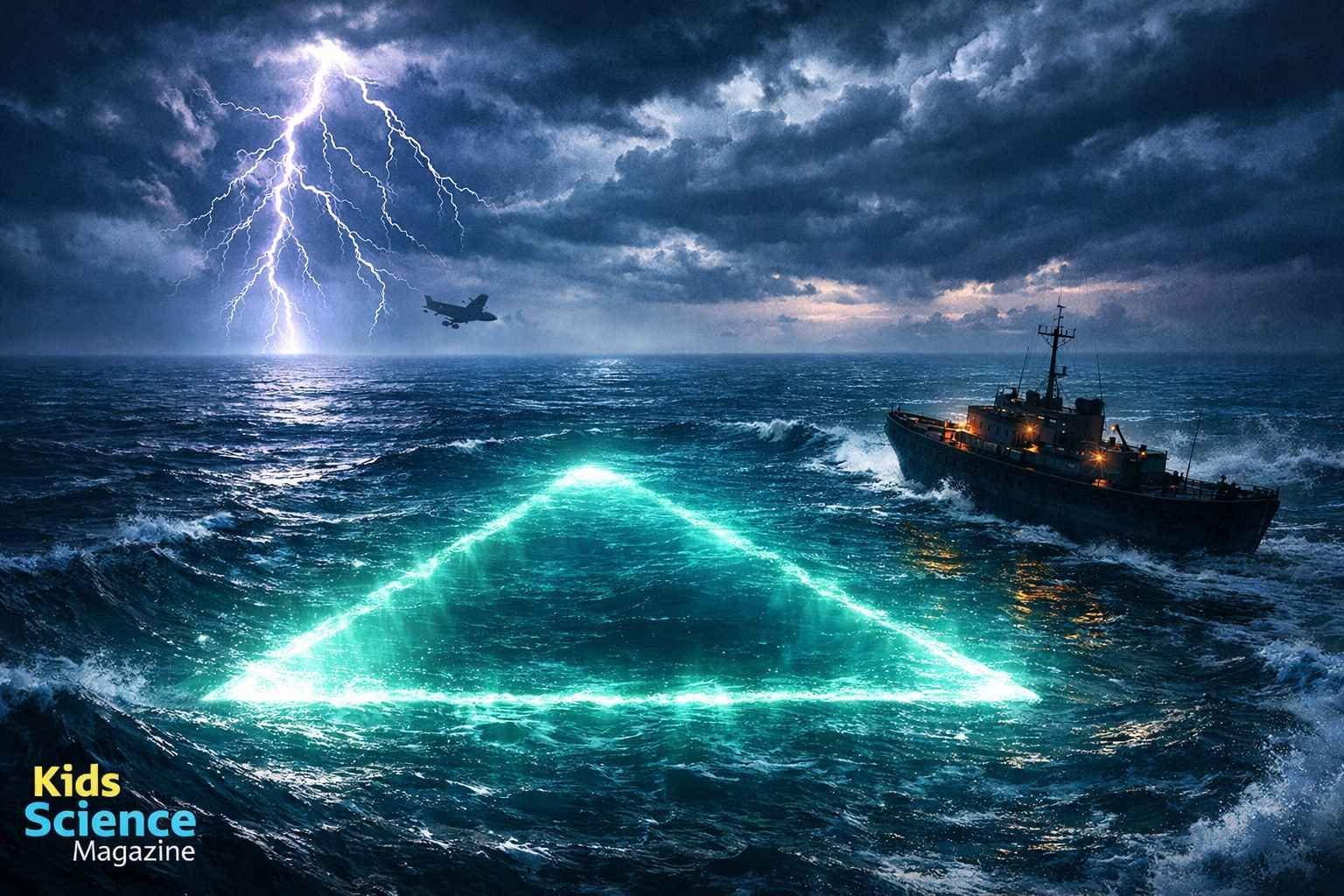
The Bermuda Triangle Mystery: Dangerous Waters or Just Bad Luck? (Science Explained for Kids)
Where Exactly Is This Spooky Place? Separating natural ocean phenomena, extreme depths, and wild myths in the North Atlantic.
🚨 Imagine this…
You’re the captain of a cargo ship crossing a quiet stretch of the Atlantic Ocean. The sky is clear. Your radar is working perfectly. Then — your compass starts spinning wildly. Your radio goes dead. And then… silence. Your ship is never seen again. No wreck. No bodies. No clues. Just… gone.
This has happened to real people. And it all happened in the same mysterious patch of ocean — the Bermuda Triangle.
Where Exactly Is This Spooky Place?
The Bermuda Triangle is a roughly triangular region in the North Atlantic Ocean. Its three corners are the city of Miami in Florida, the island of Bermuda, and the island of Puerto Rico. That’s about 500,000 square miles of deep, dark ocean water — bigger than the entire country of Indonesia!
It’s not some far-off place either. This is one of the most heavily traveled shipping lanes in the world — thousands of ships and planes cross it every single year. And yet, for decades, people have claimed that something terrifying lurks in this triangle.
Just How Many Things Have Disappeared?
Over the last 100 years, a truly jaw-dropping number of ships, planes, and people have gone missing in this region:
Numbers like those would make anyone nervous! But are these disappearances actually more than what you’d expect in such a busy, storm-prone stretch of ocean?
The Most Mysterious Disappearances Ever
The ocean floor in this region plunges down into the Puerto Rico Trench, reaching depths over 27,000 feet deep—deeper than Mount Everest is tall! When vessels sink here, wreckage is swallowed into immense trenches.
The Scientific Theories
The Wild (But Fun!) Theories
Wait — Is the Bermuda Triangle Even That Dangerous?
In 2013, the World Wide Fund for Nature (WWF) studied the world's most dangerous shipping lanes, and the Bermuda Triangle did not make the top ten list. Lloyd’s of London, the maritime insurance syndicate, charges standard insurance premiums for vessels traversing the route, noting accident rates are statistically identical to any other heavily trafficked marine highway.
Researcher Larry Kusche re-examined the historical records and demonstrated that sensational authors frequently omitted reports of severe hurricanes, exaggerated calm weather conditions, or attributed wrecks that occurred thousands of miles away to the Triangle. The mystery of the Bermuda Triangle is largely a manufactured legend built on top of real natural oceanic hazards.
✨ Did You Know?
📖 Science Word
Microburst
/MY-kroh-burst/A localized, intense column of sinking air within a thunderstorm that produces damaging divergent winds exceeding 100 miles per hour upon hitting the ground or ocean surface.
🔤 Word Scramble
Test Yourself!
Question 1 of 4
Which three geographic locations mark the vertices of the Bermuda Triangle?
Quick Poll
Which natural phenomenon do you think is most responsible for true shipwrecks in the Bermuda Triangle?
How fun was this article?