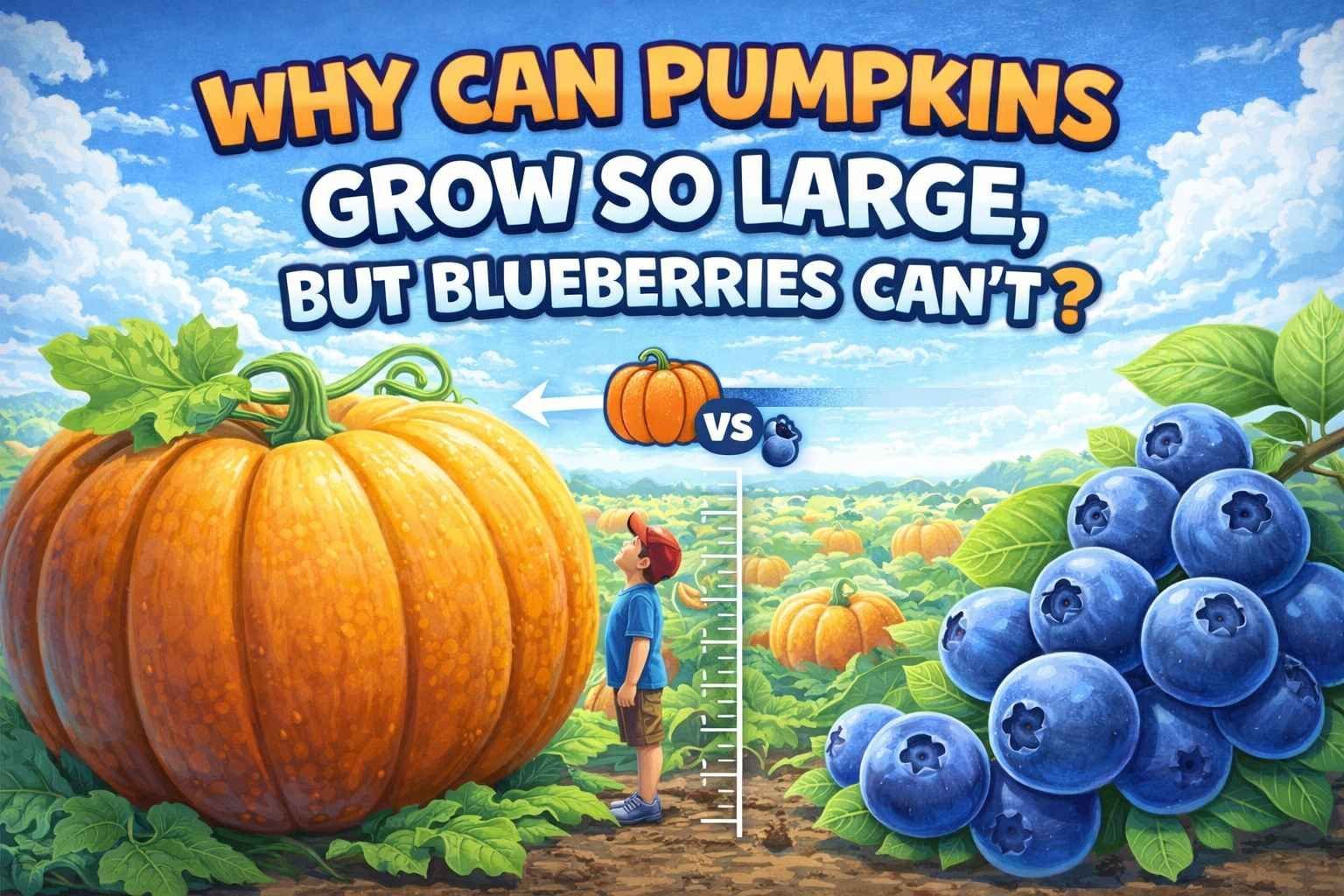
Why Do Pumpkins Grow So Big but Blueberries Stay Small? 🎃🫐
Learn why pumpkins grow so large but blueberries stay small through plant energy, genetics, and fruit growth.
Learn why pumpkins grow so large but blueberries stay small. Easy explanation of plant energy, genetics, and fruit growth for kids with fun facts, quiz, and activity.
Have you ever seen a giant pumpkin at a fair? Some are so big that people can sit inside them! 😲🎃Now compare that to a tiny blueberry 🫐—small enough to pop into your mouth in one bite.
So why can pumpkins grow HUGE, while blueberries stay tiny?Let’s explore this fruity science mystery! 🍓🔍
🌱 It Starts with the Plant’s Job
Fruits grow to help plants protect and spread seeds.
But not all plants do this the same way!
🎃 Pumpkins:
🫐 Blueberries:
👉 It’s like this:Pumpkins say, “Make ONE giant fruit!”Blueberries say, “Make LOTS of tiny fruits!”
⚡ Energy Makes the Difference
Plants get energy from:
Pumpkins:
Blueberries:
🧬 Genetics: The Plant’s Blueprint
Every plant has genes, like instructions in a recipe.
🎃 Pumpkin genes say:
👉 “Grow BIG and round!”
🫐 Blueberry genes say:
👉 “Stay small, but grow many!”
Even if you give a blueberry plant lots of food and water,it still won’t grow into a pumpkin—it’s not in its DNA!
💧 Water Storage Power
Pumpkins are mostly made of water (about 90%)! 💦
Their thick skin helps them:
Blueberries:
🌿 Plant Structure Matters
Pumpkins grow on strong vines that:
Blueberries grow on small bushes that:
🌟 DO YOU KNOW?
🤯 FUN SCIENCE FACTS!
✨ Pumpkins are actually a type of berry (surprising, right?)✨ Some pumpkins grow over 1 kg per day under perfect conditions!✨ Blueberries have a natural waxy coating that protects them.
🎯 QUIZ TIME! (Test Your Fruit Knowledge)
1️⃣ Why do pumpkins grow so large?a) They get more sunlightb) They focus energy on fewer fruitsc) They are heavierAnswer: b
2️⃣ Why don’t blueberries grow big?a) They don’t like waterb) Their genes keep them smallc) They grow undergroundAnswer: b
3️⃣ What helps pumpkins grow so big?a) Strong vines and water storageb) Cold weatherc) Small seedsAnswer: a
🧪 TRY THIS!
Fruit Comparison Activity 🍎
You need:
Try this:
You’re thinking like a scientist! 🔬
🌈 Encouragement to Explore
Next time you eat a fruit, ask yourself:
Whether it’s a giant pumpkin or a tiny blueberry,each one is designed perfectly by nature! 🌍✨
Keep exploring—you never know what surprising science you’ll discover next! 🚀
✨ Did You Know?
📖 Science Word
Genetics
/juh-NET-iks/The study of genes and heredity, which provides the biological blueprint determining how plants and living things grow.
🔤 Word Scramble
Test Yourself!
Question 1 of 4
What is the main energy strategy difference between a pumpkin plant and a blueberry bush?
Quick Poll
Which fruit adaptation do you think is more clever for spreading seeds?
How fun was this article?