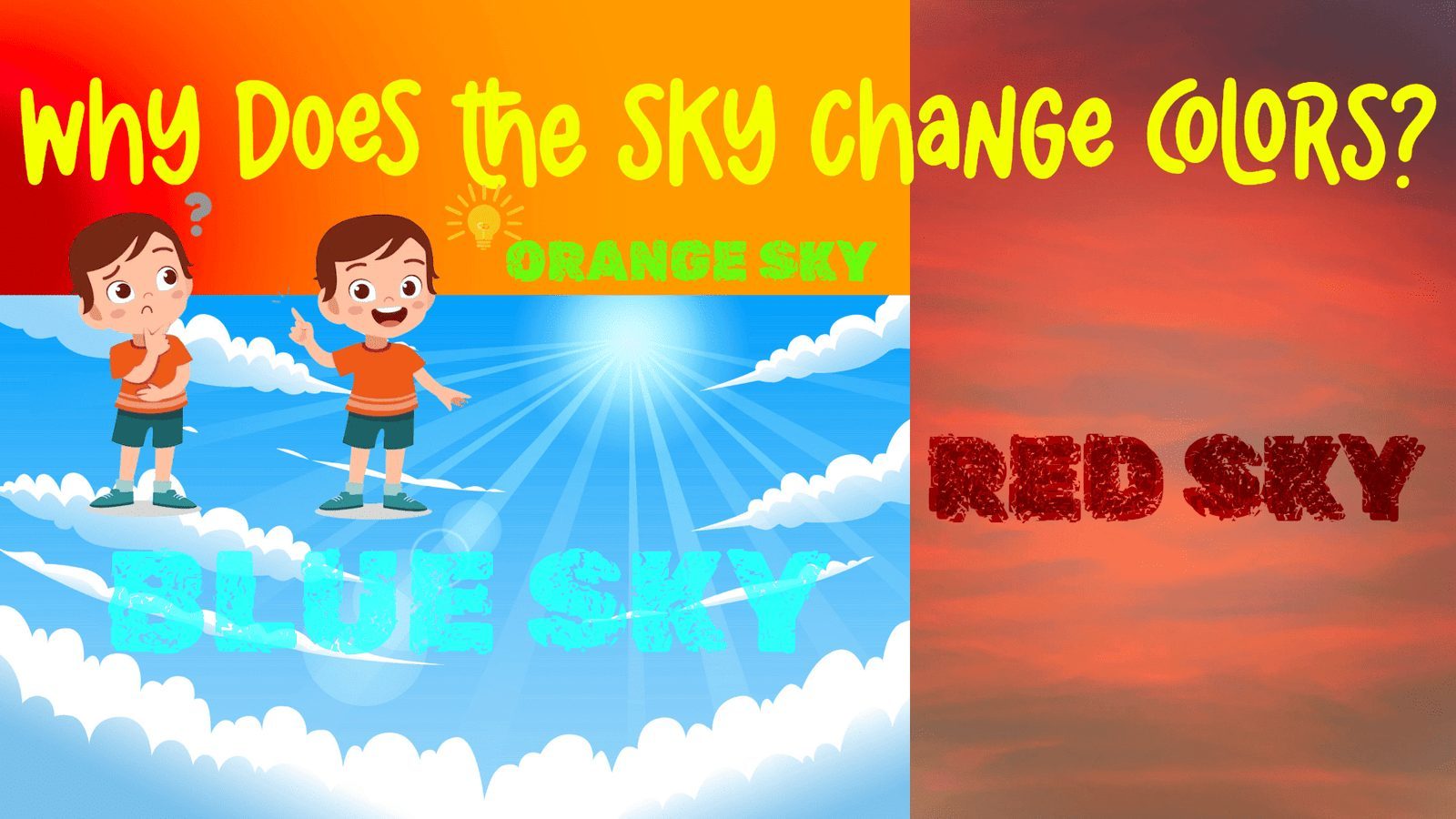
Why Does the Sky Change Colors🌈?Fun Science for Kids!
What Causes the Sky to Be Blue? Discover the science of light scattering, sunrises, and sunsets.
Have you ever looked up at the sky and wondered why it’s blue during the day but turns orange or red during sunset? It’s a magical sight, but there’s a cool science explanation behind it!
What Causes the Sky to Be Blue?
The sky isn’t actually blue—it just looks that way to us because of the way light from the sun works. Sunlight is made up of all the colors of the rainbow (red, orange, yellow, green, blue, and violet). But as sunlight travels through our atmosphere, it hits tiny particles like dust and gas.
Now, blue light has shorter, smaller waves than the other colors. These short waves are easily scattered all around the sky by the air particles, which makes the whole sky look blue!
So when you look up, you’re seeing all that scattered blue light filling the sky!
Why Is the Sky Red or Orange at Sunset?
During sunrise and sunset, the sun is much lower in the sky. This means sunlight has to travel through more of the Earth’s atmosphere to reach your eyes.
Since blue and violet light scatter so much, they get bounced out before they even reach us. The light left behind is made up of longer waves—reds, oranges, and yellows. That’s why sunsets and sunrises are full of warm, glowing colors!
Fun Fact!
Did you know that the sky on Mars is actually red during the day and turns blue at sunset? That’s because Mars has a very different atmosphere than Earth!
Interactive Quiz: How Much Do You Know About the Sky?
Fun Experiment: Make Your Own Sunset! 🌅
You can see how light scatters with a fun and simple experiment at home! Here’s what you’ll need:
Steps:
You’ll notice that the light coming out of the water starts to look a bit blue, just like the sky! Now try moving the flashlight so it shines through the water at an angle—this simulates the sunset, and you should see the water take on an orange or red tint!
Encouragement to Explore 🔍
Next time you watch a sunset or look up at the sky, remember the amazing science behind those colors! It’s not just beautiful—it’s the light from our sun and the atmosphere working together to create those stunning blues, oranges, and reds. And who knows? Maybe one day you’ll discover something new about the way our atmosphere works!
Interactive Elements:
Now you know why the sky changes colors! Keep exploring the world around you, and don’t forget to share your science discoveries!
✨ Did You Know?
📖 Science Word
Scattering
/SKAT-er-ing/The deflection of light rays in many different directions by collisions with microscopic gas molecules or particles in the atmosphere.
🔤 Word Scramble
Test Yourself!
Question 1 of 4
Why does the daytime sky appear bright blue rather than red or green?
Quick Poll
Which sky color transition is your favorite to photograph or watch?
How fun was this article?