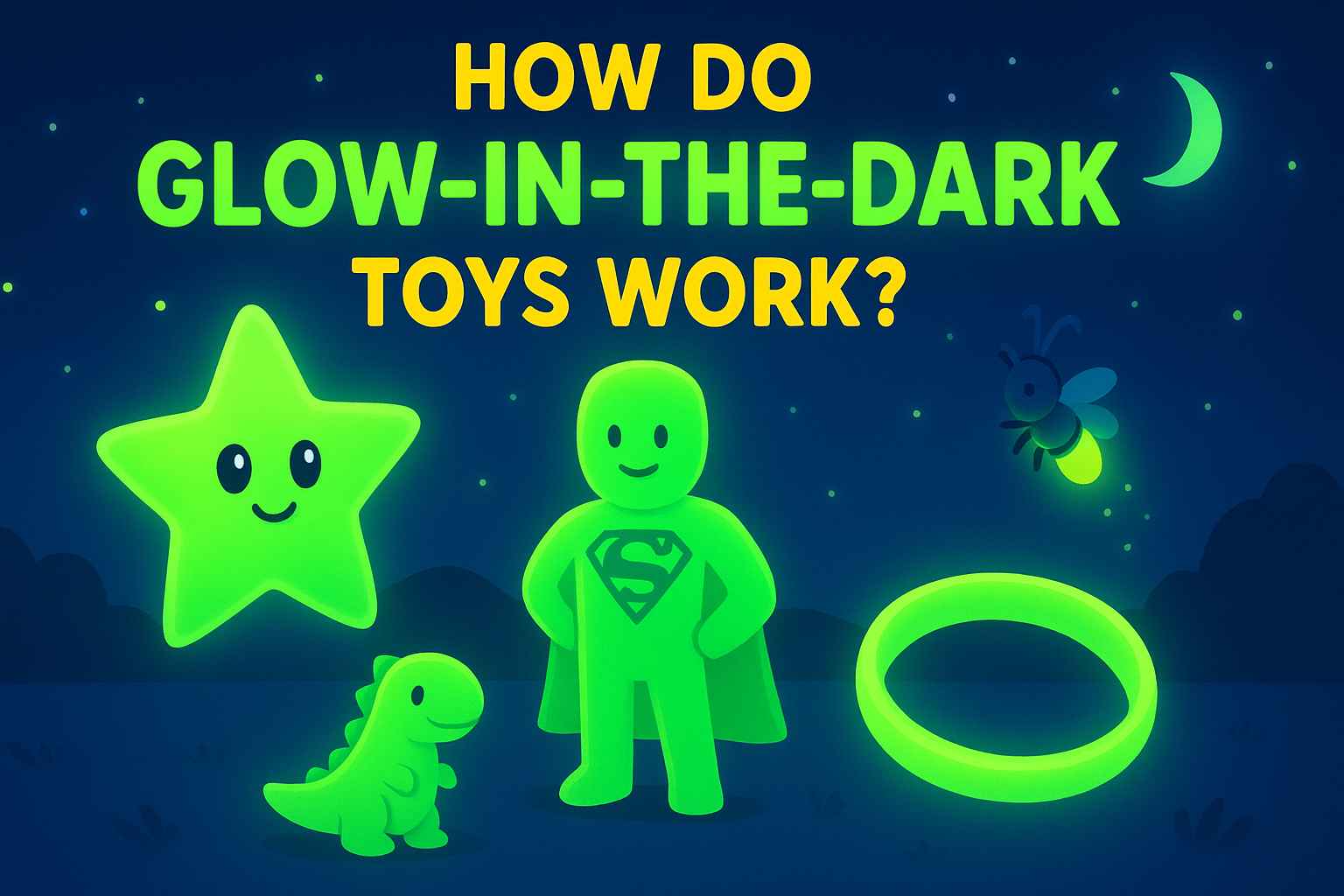
Ever wondered how your glowing stickers and toys shine in the dark? 🌙 Discover the fun science of phosphorescence and luminescence in this kid-friendly guide!
🌟 What Makes Toys Glow in the Dark?
Have you ever turned off the lights and seen your glowing stars, dinosaurs, or bracelets shining bright in the dark? ✨
It feels like magic—but it’s really science at work! These toys glow because of a phenomenon called phosphorescence.
💡 The Science Behind the Glow
When you put your glow-in-the-dark toy under a bright light (like sunlight or a lamp), it absorbs energy from the light. Later, in the dark, it releases that stored energy slowly as a gentle glow.
This happens because of special materials called phosphors—tiny chemical compounds that act like “light sponges.” The most common ones are zinc sulfide and strontium aluminate.
So, when your glowing sticker shines in your room, it’s actually giving back the light it “ate up” earlier! 😄
⚡ Luminescence: Glowing Without Heat
Not all glowing things work the same way. Some glow instantly when energy hits them—this is called luminescence.
For example:
- Fluorescent materials glow only under ultraviolet (UV) or blacklight (like in glow parties 🎉).
- Chemiluminescent materials glow because of a chemical reaction—like glow sticks that light up when you bend and shake them!
Both are forms of cool light—they glow without getting hot, unlike a light bulb.
🌟 DO YOU KNOW?
- The brightest glow-in-the-dark materials can shine for up to 12 hours after a good “charge.”
- Strontium aluminate glows nearly 10 times brighter than older materials like zinc sulfide!
- There’s even glow-in-the-dark paint used in emergency signs and road markings for safety.
🧠 FUN SCIENCE FACTS!
💥 The glow in glow sticks comes from chemiluminescence, a chemical reaction that gives off light but no heat.
🎨 Glow paints can come in different colors depending on which phosphor is used—green and blue glow the longest!
🌞 Sunlight is the best charger for your glow toys because it’s full of energy-packed ultraviolet rays.
🧩 QUIZ TIME: Test Your Glow Knowledge!
1️⃣ What helps glow toys store light energy?
a) Batteries
b) Phosphors
c) Magnets
2️⃣ What type of glow happens due to a chemical reaction?
a) Fluorescence
b) Chemiluminescence
c) Phosphorescence
3️⃣ Which material glows the brightest?
a) Zinc sulfide
b) Strontium aluminate
c) Iron oxide
(Answers: 1️⃣ b, 2️⃣ b, 3️⃣ b)
🎯 TRY THIS AT HOME!
Mini Experiment:
- Take two glow toys.
- Charge one under a lamp and one under sunlight for 1 minute.
- Turn off the lights and compare—which one glows longer?
Write your observation like a real scientist! 🔬
🌠 Encouragement to Explore
Next time your glow toy shines in the dark, remember—it’s not magic, it’s phosphorescence!
You can even explore different types of glowing materials and make your own glow art. Who knows? Maybe you’ll invent the next glow paint that lights up cities safely at night! 💡🌃
SEO Keywords:
glow in the dark toys for kids, how glow toys work, phosphorescence for kids, luminescence explained, glow science facts for kids, light energy experiments

The Kids Science Magazine Editorial Team brings together nearly a decade of hands-on experience in electronics engineering, IoT systems, and embedded technology — combined with a deep passion for making complex science genuinely exciting for young minds. Our writers have worked across core electronics testing and real-world technology development, giving every science mystery article a foundation in actual engineering thinking rather than surface-level storytelling. We believe every child deserves access to mind-blowing science — explained clearly, honestly, and in a way that makes them lean forward and ask “but wait, WHY?” Every mystery published on this site is thoroughly researched, fact-checked against credible scientific sources, and written to spark curiosity in kids aged 8–14 across the USA, UK, Canada, Australia & Others across the Globe. New mystery every Friday — because science never runs out of surprises.