🐝 Why Honey Bees “Dance Better” When Others Are Watching
Scientists discovered that honey bees adjust their famous waggle dance based on their audience, revealing that animal communication is more social than we thought.
Curiosity
Do you perform better when people are watching you? 🎭
It turns out… honey bees do too! 🐝 Scientists have discovered that bees change how well they “dance” depending on who is watching them.
Key Highlights
- Honey bees use a waggle dance to share food locations
- The dance changes depending on the audience size
- Fewer watchers = less accurate dance
- Bees adjust their behavior based on social feedback
- Discovery shows communication is not one-way—it’s interactive
🌼 Main Story
Inside a buzzing beehive, something amazing happens every day.
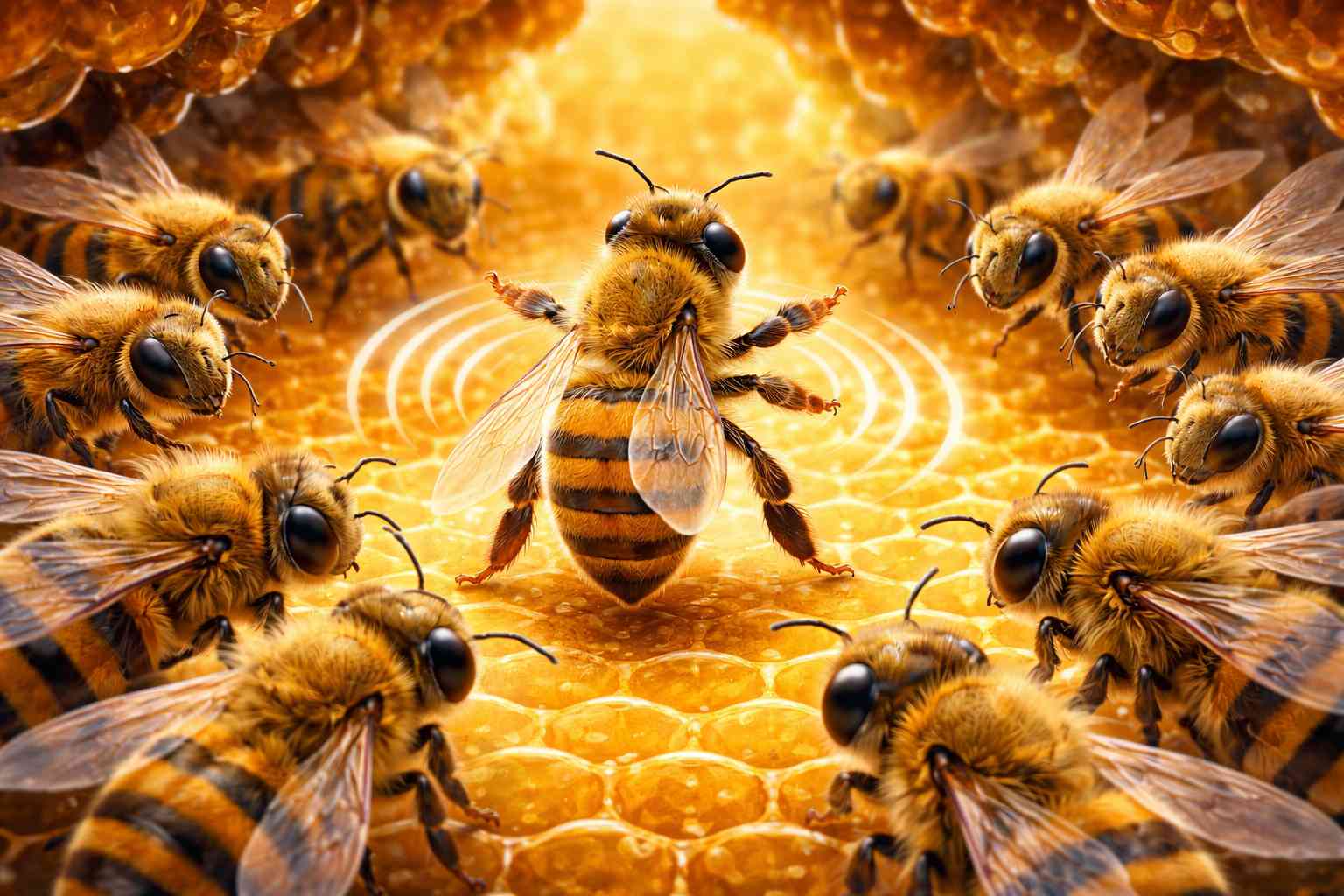
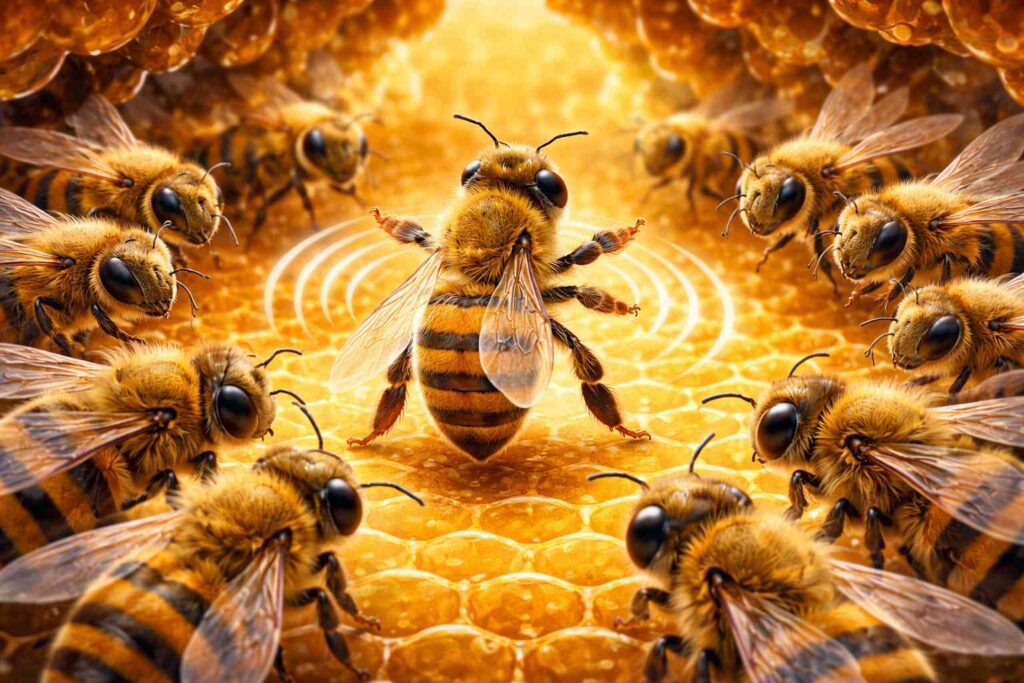
When a honey bee finds a great source of nectar, it returns home and performs a special dance called the waggle dance.
This dance is like a map made of movement.
Other bees watch closely and learn:
- Which direction to fly
- How far they need to go
For years, scientists believed this dance was a perfect, fixed message—like giving someone exact directions.
But new research has revealed something surprising.
👉 The dance is not always perfect.
👉 And it depends on who is watching.
🐝 The Secret: Bees Need an Audience
Scientists found that when many bees are watching, the dancer:
- Stays focused
- Moves precisely
- Gives accurate directions
But when fewer bees are paying attention:
👉 The dancer starts moving around more
👉 It tries to attract attention
👉 The dance becomes less precise
It’s like a performer on stage.
- Big audience → clear performance 🎤
- Small audience → trying to grab attention → mistakes
🔍 How Scientists Discovered This
Researchers carefully observed bees in special hives.
They changed:
- The number of bees watching
- The type of bees in the audience
And they noticed a clear pattern:
👉 Less engaged audience = less accurate dance
Even when the number of bees stayed the same, if the audience wasn’t paying attention, the dance still became less precise.
🤝 Bees Feel Their Audience
How do bees know who is watching?
They use:
- Touch (antennae and body contact)
- Movement around them
This helps the dancing bee sense:
👉 How many followers are nearby
👉 How interested they are
So the dance becomes a two-way interaction, not just a message.
🔬 Science Terms Explained
- Waggle Dance: A special movement bees use to show food location
- Foraging: Searching for food
- Signal: A way to send information
- Social Feedback: Responses from others that affect behavior
- Colony: A group of bees living together
🎯 Analogy or Visual Explanation
Imagine giving directions to a friend 🧭
- If they are listening carefully → you explain clearly
- If they are distracted → you keep moving, repeating, and maybe get less precise
👉 Bees do the same thing with their dance!
🌍 Why This Discovery Matters
This discovery changes how we understand communication in nature.
It shows:
- Animals don’t just send messages
- They also adjust based on reactions
This idea can help in:
- Understanding other animal behaviors
- Designing smarter robot swarms 🤖
- Studying how groups share information
It proves something important:
👉 Even tiny insects use social intelligence.
🧠 Quick Quiz
1. What is the waggle dance used for?
A. Fighting
B. Sleeping
C. Sharing food location ✅
D. Building hives
2. What happens when fewer bees watch?
A. Dance becomes faster
B. Dance becomes more precise
C. Dance becomes less accurate ✅
D. Dance stops
3. How do bees sense their audience?
A. Sound
B. Light
C. Touch and movement ✅
D. Smell only
4. What did scientists discover?
A. Bees don’t communicate
B. Dance is fixed
C. Dance changes with audience ✅
D. Bees don’t need food
5. What type of communication is this?
A. One-way
B. Two-way interactive ✅
C. Silent
D. Random
🌟 Big Takeaway
Even in a tiny beehive, communication is a shared experience.
Honey bees don’t just “send messages”—they respond, adapt, and perform, just like us!
❓ Mini FAQ
Q1: What is a waggle dance?
A movement bees use to show where food is located.
Q2: Why does the dance change?
Because bees react to how many others are watching and paying attention.
Q3: Do bees really communicate directions?
Yes! They can show both distance and direction using their dance.
Q4: Why is this discovery important?
It shows communication depends on both sender and audience.
Q5: Do other animals behave like this?
Yes, many animals adjust their behavior based on social feedback.
Brian Cox for Kids: The Scientist Who Makes Space Come Alive on TV 🌌📺


Akanksha Srivastava is a science educator with a deep commitment to making learning feel like discovery rather than duty. With a background in classroom teaching and science education, she has spent years watching the exact moment when a complicated idea finally clicks for a young student — and has dedicated her writing to recreating that moment for every child who reads her work. At Kids Science Magazine, Akanksha covers the stories of history’s greatest scientists, bringing their human struggles, unlikely breakthroughs, and extraordinary curiosity to life in a way that makes young readers see science not as a subject but as an adventure anyone can join. She also curates the magazine’s evergreen science news — selecting discoveries and developments that matter most to young learners and explaining them with the clarity and warmth of a teacher who genuinely loves her subject. Published every Tuesday, Wednesday and Thursday.