
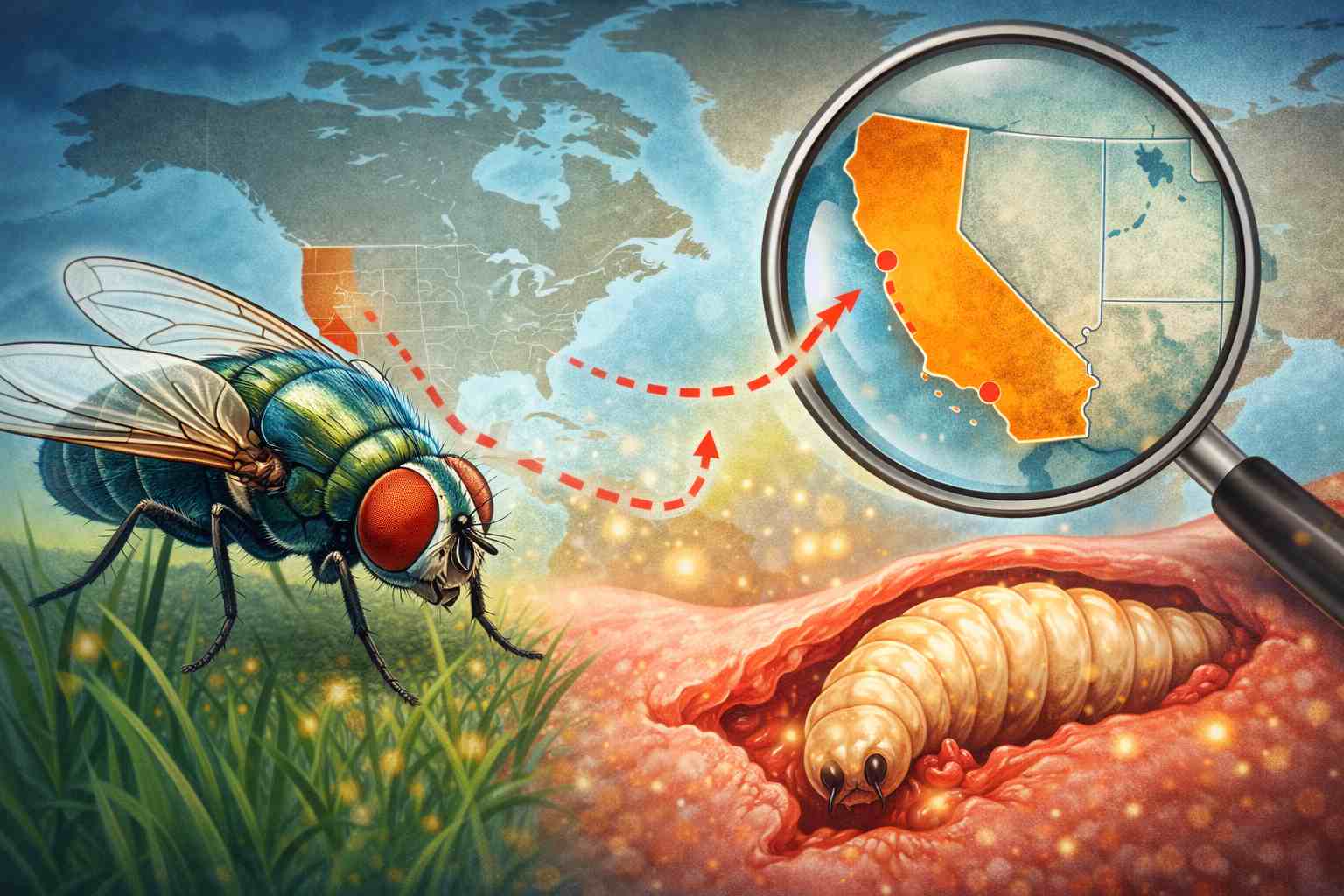
Scientists warn that a flesh-eating fly called the screwworm is moving north again. Learn how researchers are stopping it before it spreads.
A Flesh-Eating Fly Is Moving Closer — and Scientists Are Getting Ready**
Imagine a tiny insect so dangerous to farm animals that scientists once had to launch a huge science mission just to get rid of it.
Now, after being gone from the United States for decades, this insect is slowly moving north again — and researchers are watching closely.
Don’t panic! This story is about science, teamwork, and prevention, not fear.
Let’s find out what’s going on.
🧬 What Is the New World Screwworm?
Despite its scary name, the New World screwworm is not a worm at all.
It is actually:
- 🪰 The baby stage (larva) of a shiny blue-green fly
- Its scientific name is Cochliomyia hominivorax
Most flies are helpful — they clean up dead plants and animals.
But this fly is different.
⚠️ Screwworm larvae eat living flesh, not dead tissue.
That’s why scientists keep such a close eye on them.
🐄 Why Was It Such a Big Problem Before?
About 60 years ago, screwworm flies were common across:
- California
- The southern United States
- Farms with cows, sheep, pigs, and horses
The flies lay eggs in open wounds on animals.
When the eggs hatch:
- The larvae burrow into the flesh
- The wound gets bigger
- More flies are attracted
- The animal can become very sick
Back then, screwworms caused huge losses to farmers.
🧪 How Did Scientists Erase It From the U.S.?
Here’s where science saves the day 🧠✨
Scientists used an incredible trick called the sterile insect technique:
- Millions of male flies were raised in labs
- They were made unable to have babies
- These sterile males were released into the wild
- Female screwworm flies mate only once
👉 Result: no babies, no new flies, population collapsed!
This effort pushed the screwworm far south, all the way to Panama, where a protective barrier has been maintained ever since.
🌎 Why Are Scientists Concerned Now?
In recent years, screwworm flies have been:
- Found again in parts of Central America
- Moving north through southern Mexico
- Now within about 70 miles of the U.S. border
Experts believe this is happening because:
- Animals are transported by people
- Infested animals move unnoticed
- The flies slowly spread
So far, no screwworms have been found in California — but scientists want to keep it that way.
🔍 How Are Scientists Watching for the Fly?
Researchers at the University of California, Riverside are launching a statewide monitoring plan.
They are:
- Setting up special fly traps
- Using safe lures that smell like rotting meat (gross, but effective!)
- Checking traps regularly
- Teaching vets and farmers how to spot early signs
This is called early detection, and it’s the best way to stop invasive pests.
🐮 Why Livestock Are Most at Risk
Farm animals can get small cuts from:
- Barbed wire
- Birth
- Veterinary procedures
Screwworm flies don’t make wounds —
they take advantage of wounds that already exist.
California’s dairy and cattle industries are especially important, so protecting animals protects:
- Farmers
- Food supplies
- The economy
🧑⚕️ What About People?
Human infections are very rare.
They usually happen only when:
- Someone travels to affected areas
- A wound is left untreated
Scientists say:
“This is not something people should panic about.”
The focus is on animals and prevention.
🧠 Why This Story Is Actually Good News
Even though the fly is moving closer, this story shows how:
✅ Scientists learn from history
✅ Early warning systems work
✅ Education prevents outbreaks
✅ Science protects animals and people
As one researcher explained:
“The goal is preparedness, not fear.”
🌟 Fun Science Facts
🪰 Not all flies are bad — many are helpful recyclers
🧪 The sterile insect technique is still used today
🌍 Early detection saves millions of animals
🐄 California’s biggest farm product is dairy, not fruit
⭐ Big Takeaway
Nature can surprise us — even with old threats returning.
But science is ready.
By watching carefully, teaching people what to look for, and acting early, researchers hope to stop this fly before it ever becomes a problem again.
That’s science protecting the world — one tiny insect at a time.

The Kids Science Magazine Editorial Team brings together nearly a decade of hands-on experience in electronics engineering, IoT systems, and embedded technology — combined with a deep passion for making complex science genuinely exciting for young minds. Our writers have worked across core electronics testing and real-world technology development, giving every science mystery article a foundation in actual engineering thinking rather than surface-level storytelling. We believe every child deserves access to mind-blowing science — explained clearly, honestly, and in a way that makes them lean forward and ask “but wait, WHY?” Every mystery published on this site is thoroughly researched, fact-checked against credible scientific sources, and written to spark curiosity in kids aged 8–14 across the USA, UK, Canada, Australia & Others across the Globe. New mystery every Friday — because science never runs out of surprises.