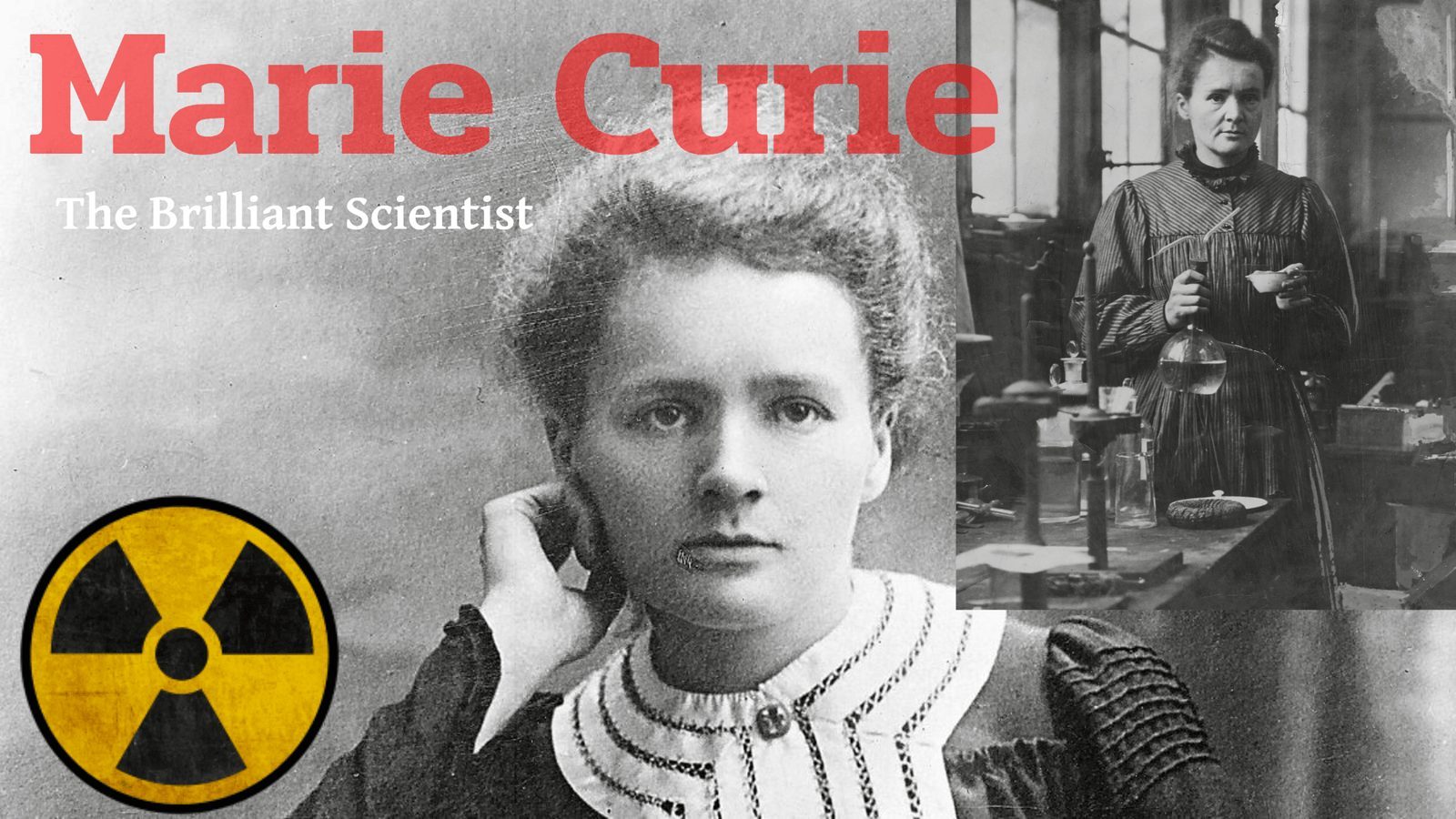
Marie Curie: The Woman Who Discovered Radioactivity 🌟
Who Was Marie Curie? The inspiring journey of the dual Nobel laureate who unlocked atomic energy.
Marie Curie is one of the most amazing scientists in history. She discovered something incredible called radioactivity, and her work changed science forever! Marie Curie was not just smart; she was brave, curious, and never gave up on her dreams, even when things were tough. Let’s dive into her incredible journey and see why she is such an inspiring role model for kids!
Who Was Marie Curie?
Marie Curie was born in Poland in 1867 and was very curious from a young age. She loved to learn, especially about science. Marie moved to Paris to study, where she became one of the first women to attend a famous university called Sorbonne. Despite many challenges, she kept working hard because she loved science so much!
Fun Fact: Marie Curie was the first woman to win a Nobel Prize and is the only person to win Nobel Prizes in two different sciences—Physics and Chemistry!
What Is Radioactivity? 🧪
Radioactivity is when certain materials give off energy in the form of tiny particles. Marie Curie discovered radioactivity when she was studying minerals like uranium. She found that these minerals released energy even though no one could see it! Her work was the start of using radioactivity in medicine to help fight diseases like cancer.
Quiz:
Marie Curie’s Amazing Discoveries
Marie worked with her husband, Pierre Curie, and together they discovered two new elements: polonium (named after Poland, Marie’s home country) and radium. She spent years studying these elements and showed the world that radioactivity could be a powerful tool in science.
Challenges Marie Faced and Overcame 🚧
Marie Curie faced many challenges because she was a woman in a time when most scientists were men. She had to work in a small, drafty lab and faced health problems from her experiments with radioactive materials. Despite these obstacles, she never stopped pursuing her passion.
Fun Fact: Marie carried test tubes of radioactive material in her pockets, not knowing it was dangerous! She was so dedicated to her work that she didn’t care about the risks.
Interactive Quiz: How Much Do You Know About Marie Curie?
Why Is Marie Curie a Role Model? 👩🔬
Marie Curie’s story shows us that hard work, determination, and curiosity can lead to amazing discoveries. She inspires kids to be curious, to ask questions, and to never give up, even when things seem tough. Marie Curie also shows us that anyone can be a scientist if they have a love for learning—whether you’re a boy or a girl!
Fun Fact!
Marie Curie’s notebooks are still radioactive even after 100 years! They are kept in special lead-lined boxes and are too dangerous to handle without protection.
Try This Fun Activity: Make Your Own “Radium Glow” Jar ✨
You can create a glowing jar inspired by Marie Curie’s discovery of radium! Use glow-in-the-dark paint and a glass jar. Paint the inside of the jar with the glow paint, let it dry, and watch it light up in the dark. Just imagine how exciting it was for Marie to discover a real glowing element!
Encouragement to Explore 🔍
Be like Marie Curie and explore the world around you! You can be a scientist too. Try experimenting with simple science kits, ask questions about how things work, or visit a science museum. The world needs curious minds like yours!
Interactive Elements:
Marie Curie’s life teaches us that anyone can make a difference. All you need is curiosity, a bit of courage, and a passion for learning! 🚀
✨ Did You Know?
📖 Science Word
Radioactivity
/ray-dee-oh-ak-TIV-ih-tee/The spontaneous emission of energetic particles or radiation resulting from the decay of unstable atomic nuclei.
🔤 Word Scramble
Test Yourself!
Question 1 of 4
In which two distinct scientific fields did Marie Curie win her Nobel Prizes?
Quick Poll
If you could pioneer a major scientific breakthrough, which field would you choose?
How fun was this article?