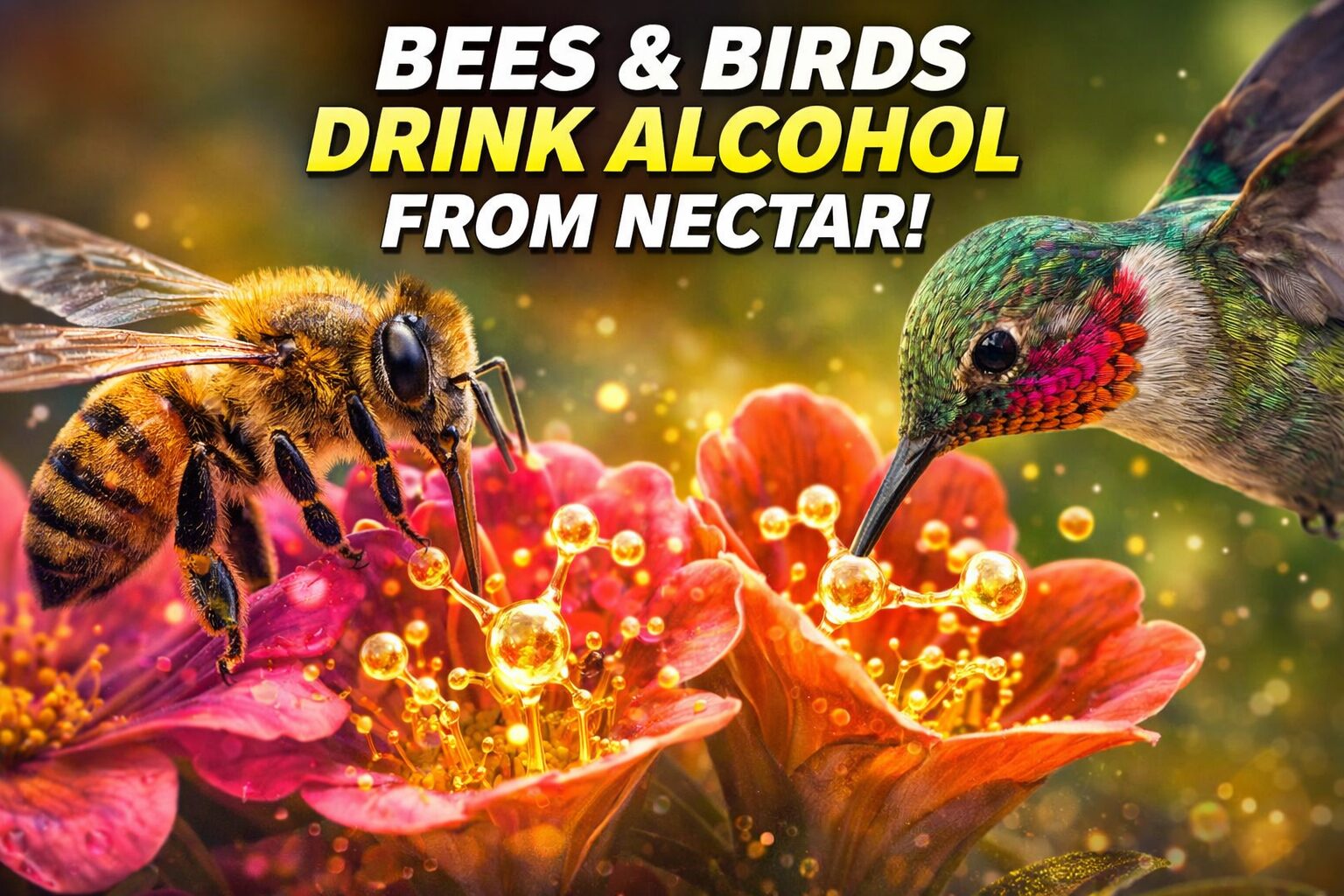
Scientists discovered that nectar contains small amounts of alcohol, meaning bees and hummingbirds consume it daily—without getting drunk!
Curiosity
What if every time a bee visited a flower… it was sipping a tiny cocktail? 🍹🐝
It sounds funny, but scientists have discovered something surprising—nectar naturally contains alcohol!
Key Highlights
- Many flowers produce tiny amounts of alcohol (ethanol)
- Bees and hummingbirds drink it all day long
- Despite this, they don’t get drunk
- Animals may have evolved tolerance to alcohol
- Discovery reveals hidden chemistry in nature

🌸 Main Story
Flowers may look calm and peaceful, but inside their nectar, something unexpected is happening.
Scientists found that many flowers naturally contain small amounts of alcohol, also called ethanol. This happens because tiny organisms like yeast can ferment sugars in nectar, just like how fruit juice can turn into alcohol.
👉 That means when bees and hummingbirds drink nectar…
they are actually drinking very small amounts of alcohol all day long!
🐝 How Much Alcohol Are They Drinking?
The amount of alcohol in nectar is tiny—but these animals drink a LOT of nectar.
For example:
- Hummingbirds drink up to 1.5 times their body weight in nectar daily
- This adds up to alcohol intake similar to a human having about one drink per day
But here’s the surprising part:
👉 They don’t seem drunk at all!
🧪 Why Don’t They Get Drunk?
Scientists think there are a few reasons:
- They drink slowly throughout the day
- Their bodies burn energy very fast
- They may have special biological adaptations
In fact, studies show:
- Hummingbirds can tolerate low alcohol levels
- But they start avoiding nectar if alcohol gets too high
So they are not just drinking randomly—they are carefully managing what they consume.
🧠 More Than Just a “Buzz”
Alcohol in nectar might not just be harmless—it could actually affect behavior.
Nectar also contains other chemicals like:
- Caffeine
- Nicotine
These can influence:
- How animals choose flowers
- How often they return
👉 Alcohol might also play a role in how pollinators behave—but scientists are still studying this.
🔬 Science Terms Explained
- Ethanol: A type of alcohol found in drinks and fermented foods
- Fermentation: When microbes turn sugar into alcohol
- Nectar: Sweet liquid made by flowers to attract pollinators
- Pollinator: Animals like bees and birds that help plants reproduce
- Metabolism: How the body processes substances like food or alcohol
🎯 Analogy or Visual Explanation
Imagine sipping juice all day 🧃
But unknown to you, that juice has tiny traces of alcohol.
- You drink small amounts slowly
- Your body processes it quickly
👉 So you never feel dizzy or drunk
That’s exactly what’s happening with bees and hummingbirds!
🌍 Why This Discovery Matters
This discovery changes how we see nature:
- 🌸 Flowers are not just food—they are chemical environments
- 🐝 Animals may have evolved to handle daily alcohol intake
- 🧬 It helps scientists understand evolution and metabolism
It also raises big questions:
👉 Could alcohol have played a role in the evolution of animals—including humans?
🧠 Quick Quiz
1. What is found in flower nectar?
A. Salt
B. Alcohol (ethanol) ✅
C. Oil
D. Metal
2. Why does nectar contain alcohol?
A. Sunlight
B. Fermentation by microbes ✅
C. Rain
D. Wind
3. Do bees and hummingbirds get drunk?
A. Yes
B. No ✅
C. Sometimes
D. Always
4. Why don’t they get drunk?
A. They don’t drink
B. They drink slowly and metabolize quickly ✅
C. They avoid nectar
D. They sleep
5. What type of animals are bees and hummingbirds?
A. Predators
B. Pollinators ✅
C. Scavengers
D. Herbivores
🌟 Big Takeaway
Nature is full of hidden surprises—even in something as simple as nectar.
Bees and birds aren’t just feeding… they’re part of a complex chemical world where even tiny drops of alcohol play a role.
❓ Mini FAQ
Q1: Do flowers really contain alcohol?
Yes, small amounts form naturally through fermentation.
Q2: Can animals get drunk from nectar?
Not at normal levels—they process it quickly.
Q3: Why do flowers have alcohol?
It’s a natural result of sugar fermentation by microbes.
Q4: Do animals like the alcohol?
They tolerate small amounts but avoid higher levels.
Q5: Why is this important?
It helps scientists understand animal biology and evolution.

Akanksha Srivastava is a science educator with a deep commitment to making learning feel like discovery rather than duty. With a background in classroom teaching and science education, she has spent years watching the exact moment when a complicated idea finally clicks for a young student — and has dedicated her writing to recreating that moment for every child who reads her work. At Kids Science Magazine, Akanksha covers the stories of history’s greatest scientists, bringing their human struggles, unlikely breakthroughs, and extraordinary curiosity to life in a way that makes young readers see science not as a subject but as an adventure anyone can join. She also curates the magazine’s evergreen science news — selecting discoveries and developments that matter most to young learners and explaining them with the clarity and warmth of a teacher who genuinely loves her subject. Published every Tuesday, Wednesday and Thursday.