The Voynich Manuscript: A Mysterious Puzzle from the Past!
The World's Most Mysterious Book: 240 vellum pages of unknown script, imaginary botanical wonders, and undeciphered cipher riddles.
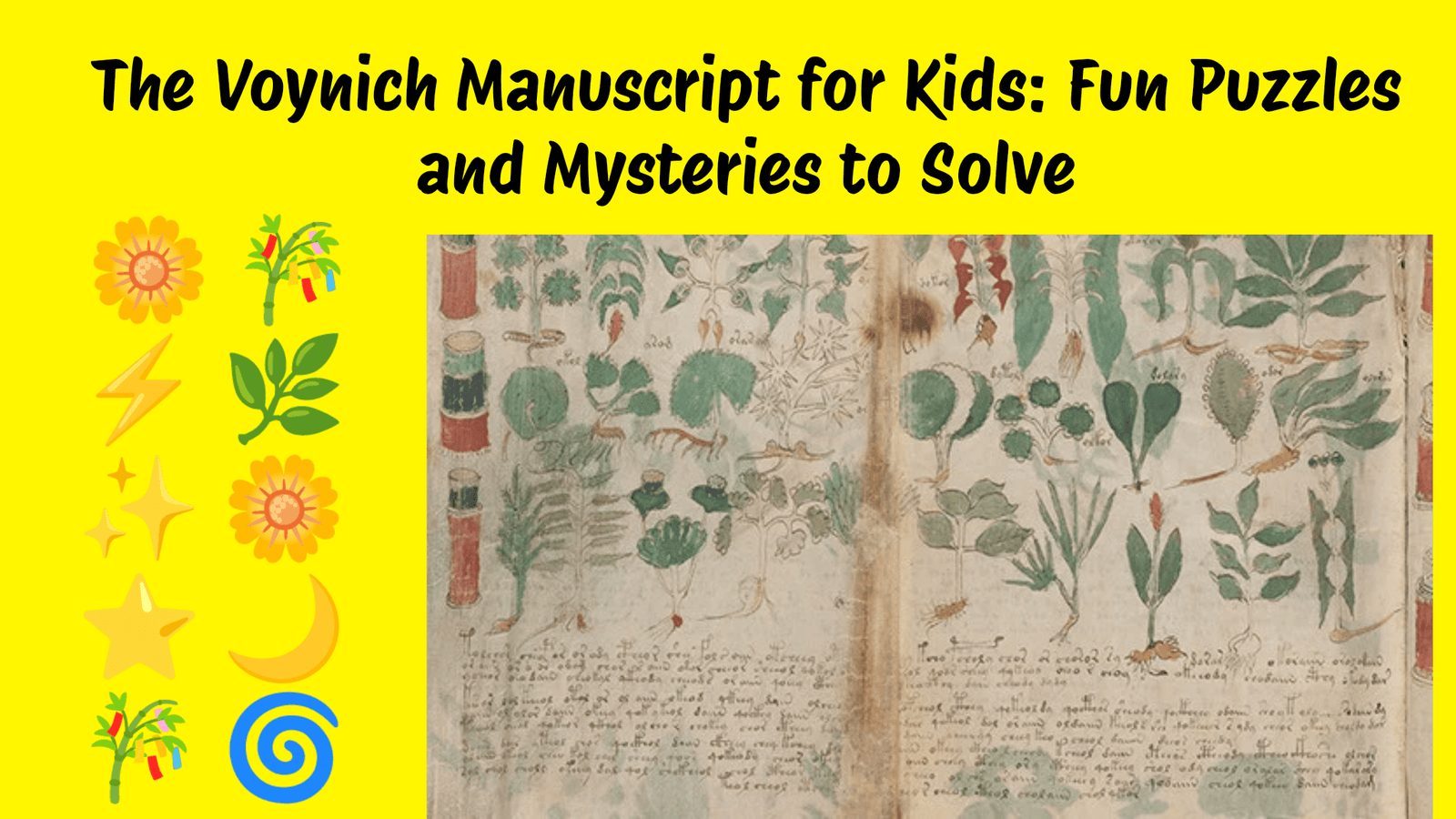
Imagine finding an ancient, beautifully preserved book that no one in the world can read! That is the true story of the Voynich Manuscript—a medieval codex filled with looping cursive script, bizarre botanical drawings of plants that don’t exist in nature, astrological wheel charts, and strange bathing nymphs. Cryptographers, military codebreakers, linguists, and computer scientists have studied this book for over a century, yet not a single sentence has been deciphered!
Carbon dating conducted by the University of Arizona reveals that the calfskin vellum pages were made in the early 15th century (between 1404 and 1438), during the Italian Renaissance. The manuscript contains about 240 surviving pages organized into distinct thematic sections: herbal botany, astronomical charts, biological balneology, cosmological fold-outs, and pharmaceutical recipes.
It takes its modern name from Wilfrid Voynich, a rare-book dealer who acquired the manuscript in 1912 from a Jesuit college in Villa Mondragone, Italy. Today, it resides safely inside Yale University’s Beinecke Rare Book and Manuscript Library under catalog call number MS 408.
Over the decades, researchers and codebreakers have proposed several intriguing possibilities:
The Voynich Manuscript stands as one of history's greatest intellectual challenges. Modern artificial intelligence, natural language processing models, and high-resolution digital imaging are bringing researchers closer every day. Keep practicing problem-solving, learn about cryptography, and stay curious—maybe one day you will be the codebreaker who finally cracks the Voynich code!
✨ Did You Know?
📖 Science Word
Cryptanalysis
/krip-tuh-NAL-uh-sis/The science and study of analyzing information systems, secret codes, and ciphers to decode hidden messages without possessing the secret key.
🔤 Word Scramble
Test Yourself!
Question 1 of 4
What scientific dating technique proved that the vellum pages of the Voynich Manuscript date back to the early 1400s?
Quick Poll
Which theory about the true nature of the Voynich Manuscript do you believe is most likely?
How fun was this article?