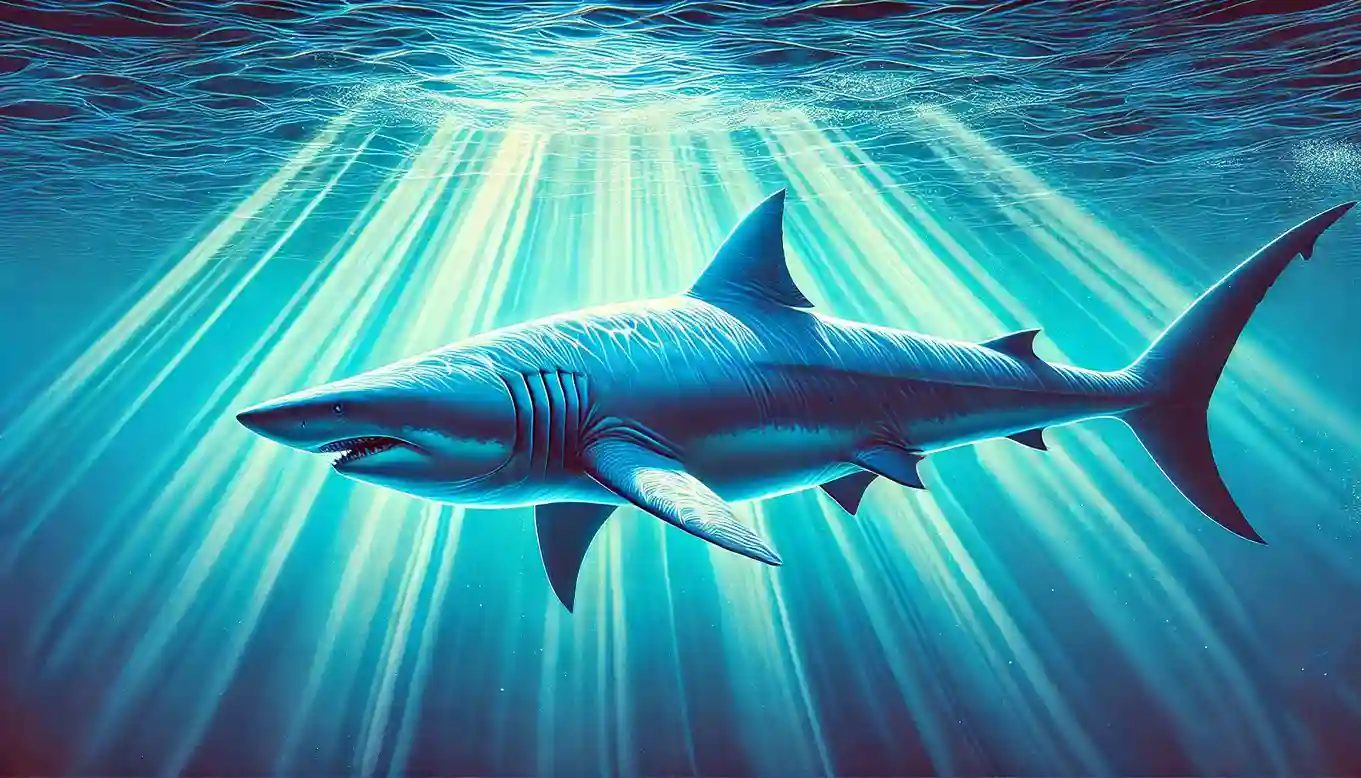
Megalodon Mystery Solved! The Giant Shark Was Sleeker, Longer, and Built for the Hunt!
Scientists Reveal New Look of the Giant Shark: How fossilized vertebrae shattered the myth of the bulky Great White body shape.
Imagine a shark as long as two school buses! The mighty Megalodon, one of the largest predators to ever swim in the ocean, just got a new look—thanks to some incredible new science!
For years, people thought the Megalodon looked like a giant great white shark, but new research from the University of California, Riverside says that’s all wrong! Scientists now believe this prehistoric hunter had a much longer, sleeker body—more like a lemon shark or even a massive whale!
How Did Scientists Figure This Out?
Scientists usually study Megalodon teeth to estimate its size, but this time, they looked at something different—its backbone! The research team examined fossilized vertebrae (spine bones) from Megalodon and compared them to over 100 species of modern and ancient sharks.
What they found was jaw-dropping:
A Super-Sized Lemon Shark?
Great white sharks are built for short bursts of speed, but lemon sharks have a more streamlined, torpedo-shaped body, which helps them swim for long distances without wasting energy. Scientists now believe Megalodon had this longer, slimmer body shape, meaning it could glide through the ocean more easily while searching for prey across vast open waters.
Baby Megalodons Were Already Huge!
Here’s another mind-blowing fact: Megalodon babies (called pups) were already around 13 feet long when they were born—about the size of an adult great white shark! That means baby Megalodons were already formidable hunters pursuing marine mammals right from the start!
Why Does This Matter?
Understanding Megalodon’s true shape helps scientists learn more about how giant sea creatures evolve. Not all animals can grow huge—they need the right body shape to survive. The new study suggests Megalodon was one of the most extreme examples of gigantism in the ocean!
So, next time you picture Megalodon, don’t think of a giant great white shark—imagine a longer, sleeker, and even more powerful super predator cruising through the ancient seas! 🦈💙
✨ Did You Know?
📖 Science Word
Vertebrae
/VUR-tuh-bray/The series of interlocking circular bones or calcified cartilage segments that form the spine or backbone in vertebrate animals.
🔤 Word Scramble
Test Yourself!
Question 1 of 4
What anatomical fossil evidence led scientists to discover that Megalodon had a sleeker, longer body?
Quick Poll
Which new detail about the real Megalodon surprised you the most?
How fun was this article?