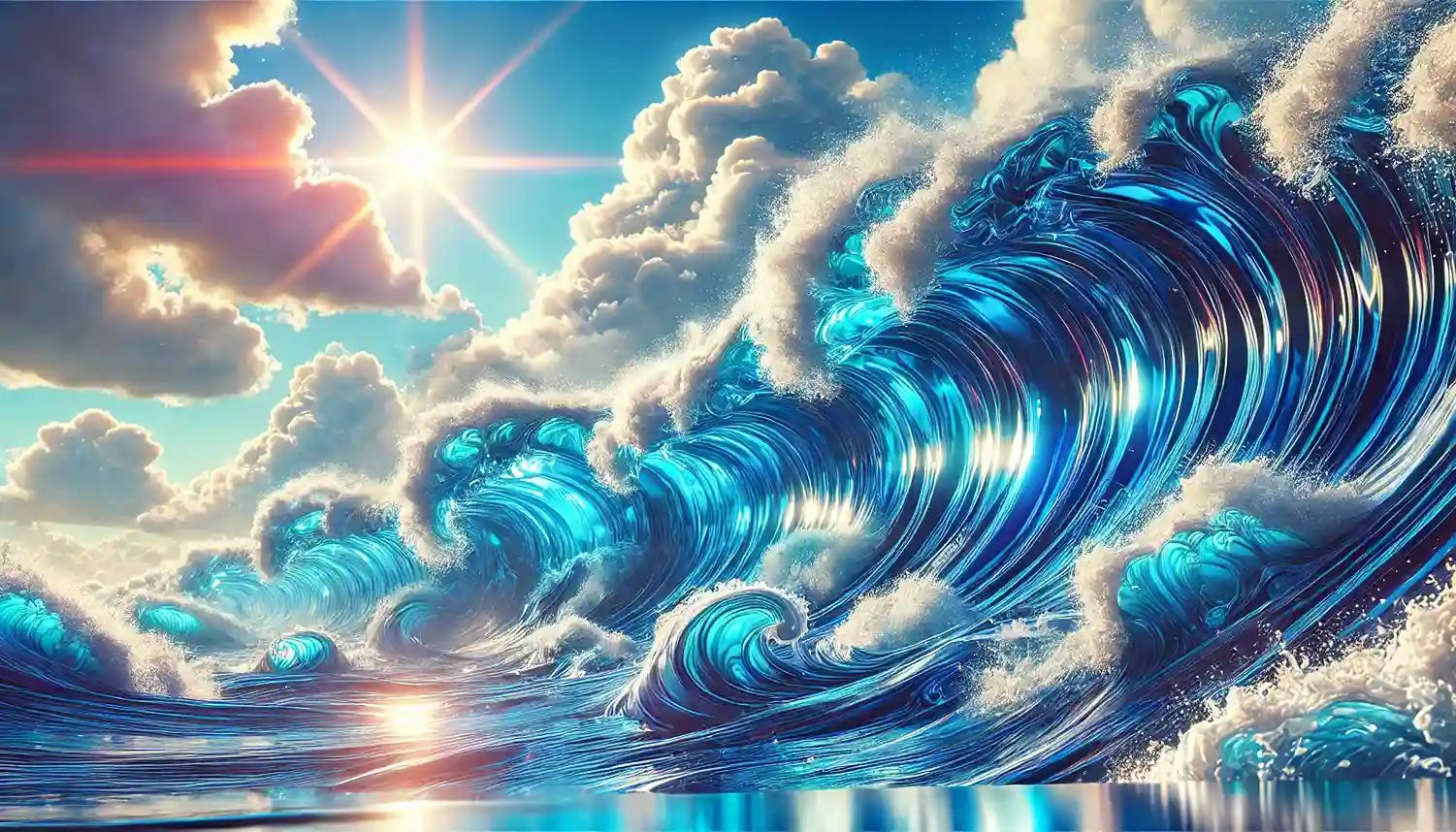
Shocking Science: What Really Causes Ocean Waves?
The Science of Wind, the Ocean, and Energy Transfer 🌊🌬️✨
The Science of Wind, the Ocean, and Energy Transfer 🌊🌬️✨
Have you ever stood at the beach and watched the waves roll in and out? 🌊🏖️👀 Waves are one of the most fascinating natural wonders of the ocean. But have you ever wondered what actually causes them? Let’s dive into the science behind ocean waves and discover how they are created! 🔬🌍💡
What is an Ocean Wave? 🌊🌊⚡
An ocean wave is a movement of energy through water. It looks like the water itself is moving across the ocean, but in reality, it’s the energy that is traveling. ⚡💧🌏 The water particles mostly move in circular motions, staying in place while the energy moves forward. That’s why, if you place a floating object on the water, it will bob up and down rather than travel with the wave! 🎈🌊🔄
How Are Ocean Waves Formed? 🌊💨🌊
1. The Power of Wind 🌬️🌊💨
Most ocean waves are created by the wind. When wind blows across the surface of the ocean, it transfers energy to the water. 🌪️🌊⚡ The stronger and longer the wind blows, the bigger the waves become. This happens in three steps:
2. Energy Transfer ⚡🌊🎢
As the wind moves across the ocean, friction between the air and the water causes the energy to be passed into the water. 🌬️💧🔄 This energy doesn’t just stay in one place—it travels! That’s why waves can form far out in the ocean and travel thousands of miles before reaching the shore. 🌎🌊🚀
3. Other Forces Creating Waves 🌊🌍⚠️
While most waves are created by wind, there are other forces that can cause waves too:
🌊 How Do Animals Use Waves? 🐬🐠🌊
Waves aren’t just fun for surfers—they are super important for ocean animals too! Dolphins and sea turtles ride waves to travel faster without using too much energy. 🌊🐬🚀 Some tiny sea creatures, like plankton, move with the waves and currents, helping to spread food across the ocean. Even seabirds, like albatrosses, use ocean waves to glide over the water and rest between long flights! 🌍🐦💨
🌊 What Affects the Size of a Wave? 📏💨
The size of an ocean wave depends on three key factors:
What Happens When Waves Reach the Shore? 🏝️🌊💥
When waves travel across the ocean, they are usually just rolling waves, moving energy through the water. 🌊🌍🚢 But when they reach the shore, they change! Here’s what happens:
This is why we see waves crashing at the shore instead of rolling smoothly like they do in the open ocean. 🌊🏖️💨
Fun Wave Facts You Should Know! 🌊🤓📚
A Real-Life Ocean Wave Story 🌊📖🌍
One of the most famous waves in history was caused by the 2004 Indian Ocean earthquake. 🌎🌊⚠️ This underwater earthquake triggered a tsunami that traveled across the ocean at high speeds, causing massive destruction in multiple countries. 🌊🌪️🏚️ Scientists have since worked hard to improve early warning systems to help protect people from future tsunamis. 🛰️🌍🔔
Why Are Waves Important? 🌊💡🏝️
Waves aren’t just fun to watch or surf—they play an important role in our world! 🌊🌎⚡
Conclusion 🌊🏖️✨
Ocean waves are a beautiful and powerful part of nature. They are created mainly by wind, but can also be caused by earthquakes, tides, and even boats! 🌊🌬️🌏 Waves carry energy across the ocean, shape coastlines, and even have the potential to power our world. Next time you visit the beach, take a moment to watch the waves—you’ll know that there’s some amazing science behind every splash! 🏝️🌊🔬
Would you like to learn more about the ocean? Keep exploring science with us and uncover more exciting mysteries of nature! 🌍📚🔍
✨ Did You Know?
📖 Science Word
Fetch
/FECH/The uninterrupted distance of open water over which wind blows in a constant direction to generate waves.
🔤 Word Scramble
Test Yourself!
Question 1 of 4
What is primarily moving across the open sea when an ocean wave travels thousands of miles?
Quick Poll
Which wild ocean wave phenomenon would you find most thrilling to study safely?
How fun was this article?