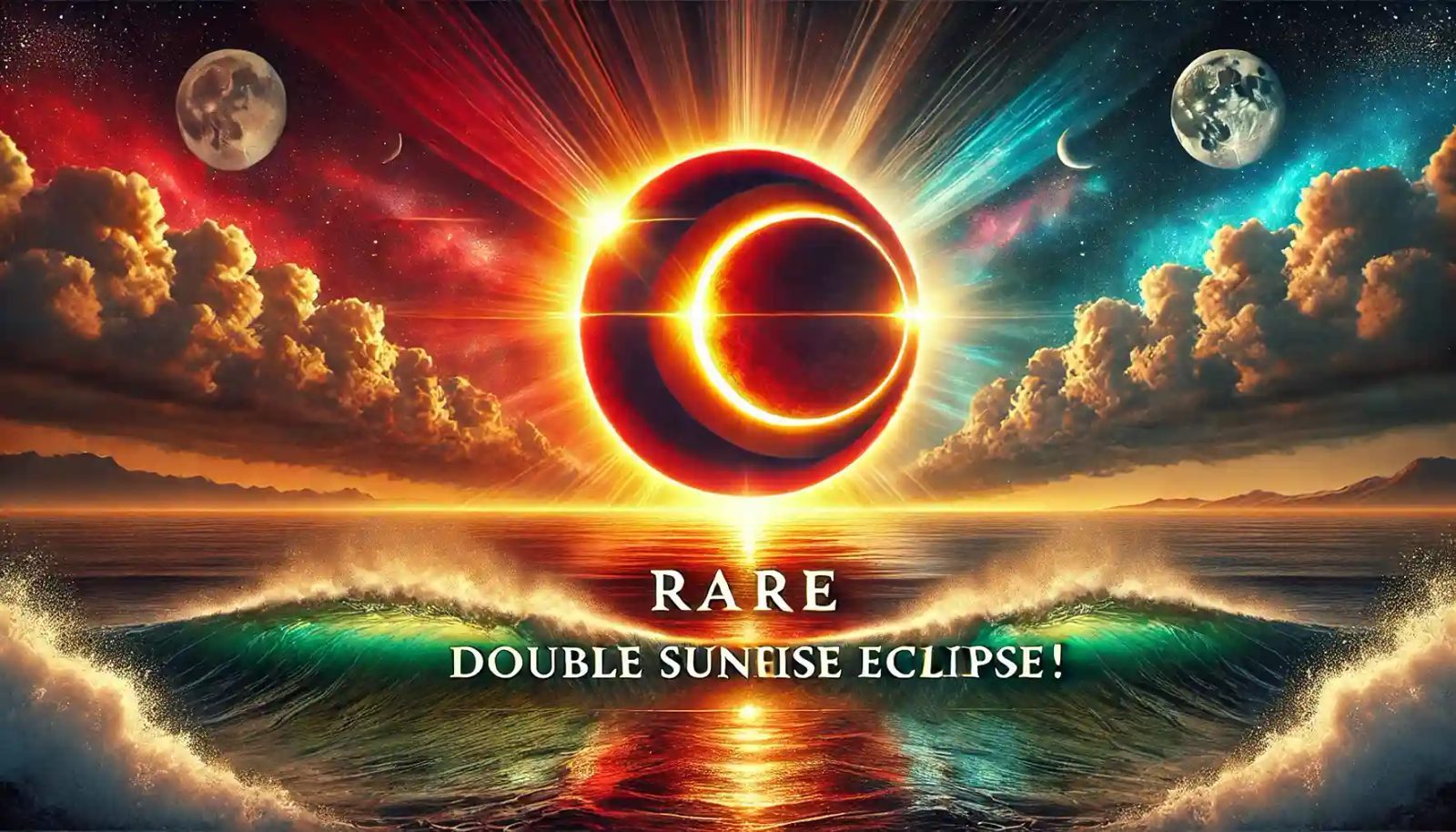
Rare ‘Double Sunrise’ to Grace the Skies Over Northeast U.S. and Canada This Weekend 🌅🌞✨
What Causes the ‘Double Sunrise’ Effect? 🌞🌗🔍
Skywatchers across the northeastern United States and eastern Canada are in for a celestial treat on the morning of Saturday, March 29, 2025. A rare and mesmerizing ‘double sunrise’ will take place as the first solar eclipse of the year unfolds. While not a total solar eclipse like the one witnessed on April 8, 2024, this partial eclipse will create a unique visual phenomenon, as the rising sun appears as a glowing crescent on the horizon. 🌙🔭🌄
What Causes the ‘Double Sunrise’ Effect? 🌞🌗🔍
This event occurs when the moon partially covers the sun’s disk, leaving a crescent-shaped sun to rise. In some regions, particularly along the terminator line (which divides day and night on Earth), two separate cusps of the sun will appear to rise independently, forming an eerie yet breathtaking illusion of two sunrises. 🌅🌘✨
The alignment of the sun, moon, and Earth during this event is slightly off-center, leading to a deep partial eclipse. The best place to experience the greatest extent of this phenomenon is in Nunavik, Quebec, Canada, where up to 94% of the sun will be obscured by the moon at sunrise. 🌍🌖🌞
Where and When to Watch the ‘Double Sunrise’ 🌅📍🔭
For skywatchers in North America, the eclipse will be in progress at sunrise, creating an incredible sight along the eastern horizon. Some of the best locations to view this rare event include:
Those in these regions should plan to find a location with a clear, unobstructed horizon for the best view. Using tools like The Photographer’s Ephemeris can help photographers and observers calculate sightlines to maximize their experience. 📷🌎🔆
How to View the Eclipse Safely 🕶️🌒⚠️
It is crucial to remember that even during a partial solar eclipse, looking directly at the sun without proper eye protection can cause severe eye damage. To safely enjoy the event:
The Bigger Picture: A Rare Astronomical Year 🌕🌠📅
This partial solar eclipse follows closely on the heels of the total lunar eclipse (‘Blood Moon’) visible across North America earlier in March. The April 8, 2024, ‘Great North American Eclipse’ was witnessed by over 50 million people, marking one of the most significant celestial events in recent history. 🌎🌔🔭
Looking ahead, the next partial solar eclipse visible in North America will occur on August 12, 2026, though it will be much smaller in magnitude. The next total solar eclipse for North America is set for March 30, 2033, visible in Alaska. 🌍🌓📅
Final Thoughts: A Must-See Celestial Event 🌟🌅✨
For astronomy enthusiasts and casual observers alike, the ‘double sunrise’ eclipse of March 29, 2025, is a once-in-a-lifetime opportunity. Whether you’re planning to capture breathtaking photos or simply witness the wonder of the cosmos, this rare event promises to be an unforgettable experience. 📷🌞🔭
Make sure to check local weather forecasts and sunrise timings for your specific location, and don’t forget to set your alarm early! The sky is putting on a show—don’t miss it! ⏰🌌🌠
✨ Did You Know?
📖 Science Word
Terminator
/TER-mih-nay-ter/The moving line dividing the sunlit daytime hemisphere of a planet or moon from the shadowed nighttime hemisphere.
🔤 Word Scramble
Test Yourself!
Question 1 of 4
What creates the visual illusion of a 'double sunrise' during this celestial event?
Quick Poll
What kind of solar eclipse would you most want to see with certified glasses?
How fun was this article?